-2.png)
Every team looking for an agentic AI tool hits the same problem: the category is so broad that a data agent, a no-code builder, and a developer framework all show up in the same search results. They solve completely different problems for completely different people, so comparing them side by side without sorting them first just adds confusion.
The 12 tools below are grouped into four categories and scored on the same six criteria, so you can start with the group that fits your workflow, your team, and your budget.
What are agentic AI tools?
An agentic AI tool is software that works toward a goal on its own, choosing each next step based on what the last step returned. It acts through connected systems, such as a sales database or an approval workflow.
How an agent works through a task
Most agentic AI tools repeat the same loop until the goal is met or a person steps in.
-
Read the goal: Work out what a finished result looks like.
-
Plan: Break the goal into smaller tasks and set the order.
-
Act: Query data or take an action in a connected system.
-
Check: Compare the result against the goal and adjust the plan.
-
Pause: Wait for approval before sensitive actions, then continue.
Agentic AI tools vs. automation and AI assistants
Older technologies now carry the agent label too, so the differences are worth spelling out.
|
Type |
How it works |
When something changes |
Example |
|
Traditional automation |
Follows fixed rules |
Stops until someone updates the rule |
Sends an invoice when a deal closes |
|
AI assistant |
Responds to one request at a time |
Waits for the next prompt |
Drafts a reply to a customer email |
|
Agentic AI tool |
Works through steps toward a goal |
Adjusts its plan and tries another route |
Investigates a revenue drop and flags the accounts behind it |
12 best agentic AI tools compared at a glance
The 12 agentic AI tools below can plan and complete multi-step work, but each is designed for a different use case. Data-focused governance agents check business definitions and access rules before taking action, helping keep answers consistent with company reporting. General-purpose builders and frameworks are faster to set up and can be adapted to a broad range of workflows.
Use the table to compare the tools and find one that fits the work you need to automate.
|
Tool |
Best for |
Skill level |
Connects to |
Governance |
Pricing |
|
AI agents for enterprise data |
|||||
|
askEdgi by OvalEdge |
Governed answers across many systems |
Business users |
150+ connectors |
Data-aware |
Free trial, then custom quote |
|
Snowflake Intelligence |
Data stored in Snowflake |
Business users |
Snowflake data, docs, MCP tools |
Data-aware in Snowflake |
Free trial, credits from $3 |
|
Databricks Genie |
Deep analysis on Databricks |
Business users |
Unity Catalog data and files |
Data-aware in Databricks |
Free until Jan 2027, then usage-based |
|
Ready-to-use agents for knowledge work |
|||||
|
Claude |
Research and document work |
Business users |
MCP connectors, browser, Microsoft 365 |
Admin controls on Team and Enterprise |
Free; Pro from $17/month |
|
Manus |
Long, hands-off tasks |
Business users |
Web, apps, files |
Admin controls on Team |
Free daily credits; paid credit plans |
|
No-code and low-code builders |
|||||
|
Zapier Agents |
Tasks across SaaS apps |
Business users |
9,000+ apps |
Admin controls on Enterprise |
Free up to 400 activities; Pro $33.33/month |
|
n8n |
Self-hosted automation |
Low-code, some technical skill |
1,000+ integrations |
Admin controls on Business |
Free self-hosted; cloud from €20/month |
|
Microsoft Copilot Studio |
Agents in Microsoft 365 |
Low-code |
Power Platform connectors |
Platform controls |
Pay-as-you-go or $200/month credit pack |
|
Developer frameworks and cloud platforms |
|||||
|
LangChain and LangGraph |
Custom, stateful agents |
Developers |
Most models and tools |
Built by the team |
Free; LangSmith from $39/seat |
|
CrewAI |
Multi-agent teams |
Developers (Python) |
Enterprise tools and APIs |
Built by the team; SSO on Enterprise |
Free; custom Enterprise pricing |
|
Amazon Bedrock AgentCore |
Production agents on AWS |
Developers |
AWS services, most models |
Platform controls (IAM) |
Pay-as-you-go; $200 free credits |
|
Gemini Enterprise Agent Platform |
Production agents on Google Cloud |
Developers |
200+ models, Google Cloud data |
Platform controls (IAM) |
Pay-as-you-go; $300 free credits |
Our own agentic analytics product, askEdgi by OvalEdge, sits at the top of the table. It is assessed on the same criteria as every other tool, and tools are grouped by category so each one is compared with its closest peers.
How we selected the best agentic AI tools: 6 evaluation criteria
We compared each tool against the work teams need it to complete, the systems it can access, and the controls available to oversee its actions. These six criteria show where each platform fits:
-
Workflow complexity: Can it handle repeatable tasks, branching processes, or coordination between agents without unnecessary setup?
-
Technical skill required: Can business users build with a visual interface, or does setup and maintenance require developers?
-
Data and app integration: Which company systems can it read from and act in, and how much work do those connections take?
-
Reliability on company data: Does it use trusted sources and business definitions to produce consistent, verifiable answers?
-
Security and oversight: Can teams limit access, approve sensitive actions, and review what an agent did?
-
Pricing and value: How do costs change with usage, and does the pricing fit a pilot as well as wider deployment?
Top 3 Agentic AI tools for enterprise data
Data agents are agentic AI tools that answer questions and run workflows directly on company data. Because they work from the organization's own definitions and access rules, their results line up with the numbers leaders already trust.
1. askEdgi by OvalEdge
askEdgi is OvalEdge's self-service agentic analytics product. Business users ask questions in plain language and get governed answers drawn from data across many systems, with or without a central warehouse.
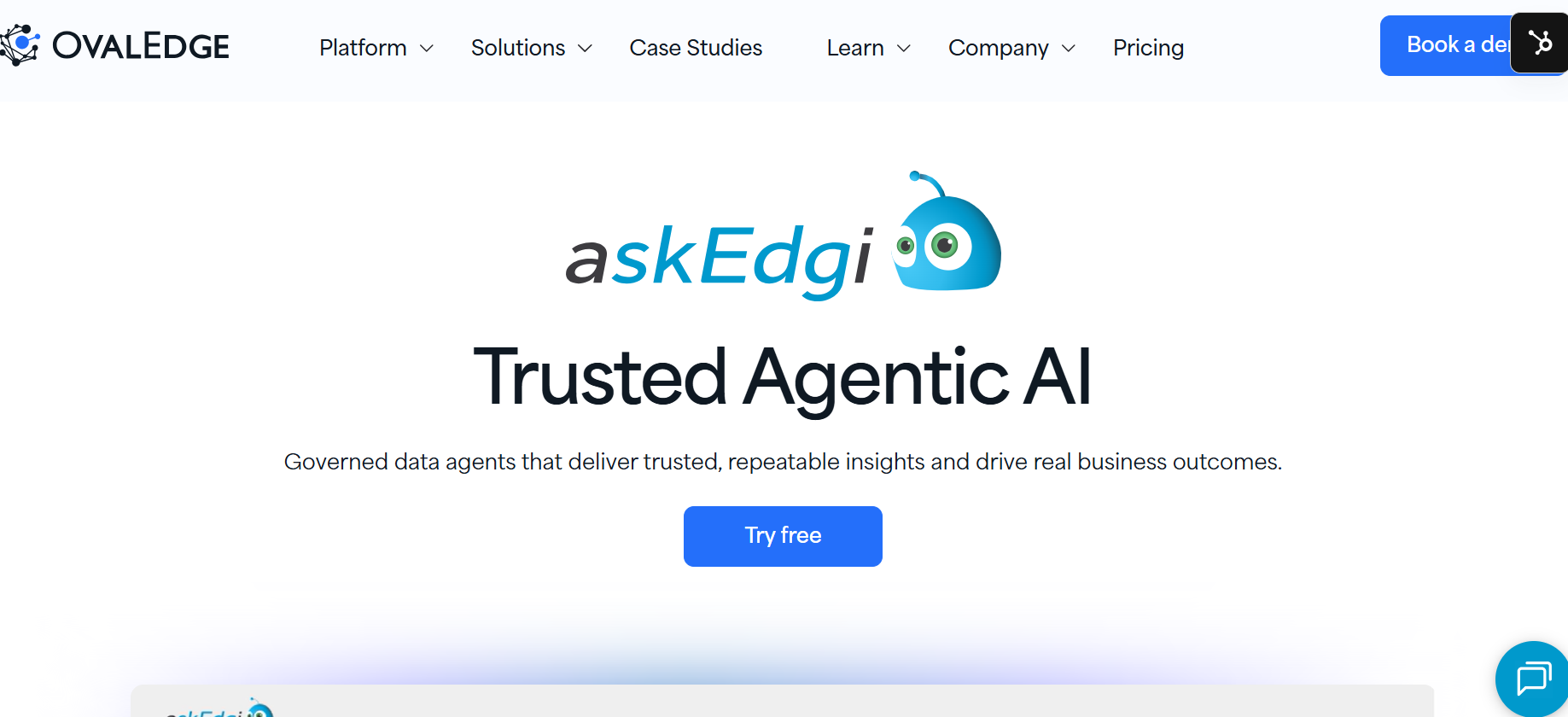
G2 rating (OvalEdge): 5/5
What does askEdgi actually do that other agentic AI tools don't?
-
The catalog records business meaning at the column level and matches questions to the right governed datasets, grounding every answer in catalog context before analysis runs.
-
It pulls only the needed data into a temporary, secure workspace and can combine warehouse and source data, so analysis doesn't require a warehouse project.
-
Recipes let creators save validated analysis for consistent reuse, while AI Functions score sentiment and flag anomalies in free-text data like support notes and logs.
2026 Forrester Total Economic Impact™ study of a composite OvalEdge customer found a 337% ROI, with payback in under six months. The same study reported a 75% reduction in compliance team effort for sensitive data discovery.
How does askEdgi keep agent actions secure and traceable?
Governance runs before and after every question. Only metadata and summaries reach the language model; raw enterprise data is never sent to public AI providers or used for training. Permissions are checked before any query runs, sensitive data is detected and restricted automatically, and data failing quality rules can be blocked. Every question and the data it touches is logged. askEdgi is SOC 2 Type II and ISO 27001 certified.
For a closer look at how this works, read our whitepaper on enterprise agentic analytics.
Best for: Business and data teams that need governed answers across many systems, including data that has never been loaded into a warehouse.
Limitations:
-
The analytics experience runs as SaaS only. On-premises deployments cover catalog discovery.
-
PDFs and similar documents can't be analyzed, and file uploads are capped at 100GB per session.
Pricing: A free trial is available. Paid pricing is quoted based on the systems connected and the people using the platform.
Have a question your team keeps asking?Try askEdgi free and see how it handles it
2. Snowflake Intelligence
Snowflake Intelligence lets business users ask questions about Snowflake data and get answers with supporting visuals. Cortex Agents combine structured tables and documents within Snowflake's governed environment, with MCP tools extending reach to other systems.
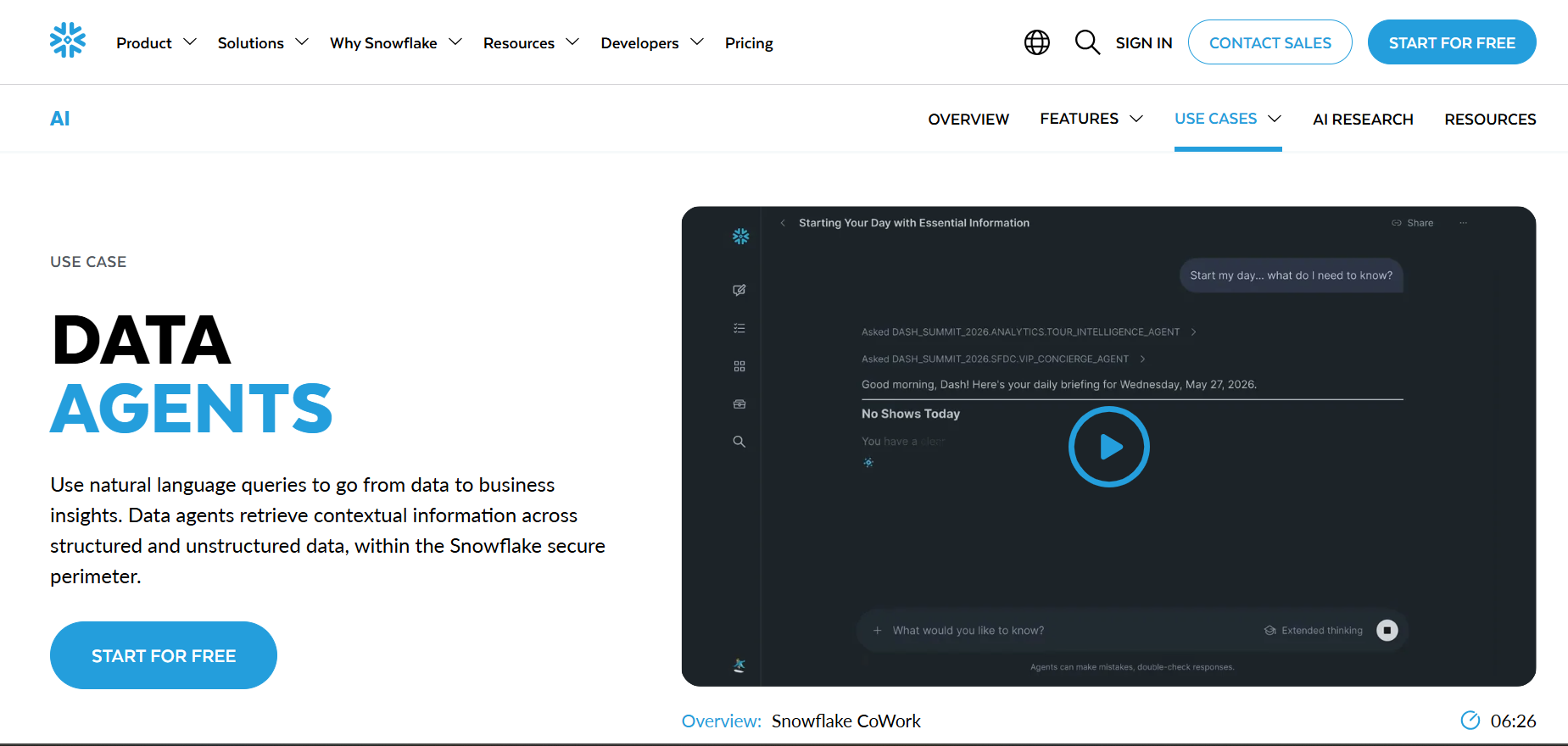
G2 rating (Snowflake): 4.6/5
What does Snowflake Intelligence do differently?
-
Cortex Analyst queries semantic views while Cortex Search retrieves document context, so agents can combine tables and documents in a single answer.
-
Built-in evaluation lets teams test agent responses and track accuracy over time, and MCP tools extend agent reach beyond Snowflake.
How does Snowflake Intelligence keep agent actions secure and traceable?
Data access follows Snowflake roles and each tool's execution context, with row access policies restricting which records a user can see. Admins can monitor agent credit use and set resource budgets; enforced quotas are available for supported AI usage.
Best for: Organizations with analytics data in Snowflake that want business users to get answers through natural-language questions.
Limitations:
-
Business definitions maintained outside Snowflake need to be modeled in semantic views before agents can use them consistently.
-
Users note that costs can be difficult to predict as compute use grows. Managing warehouses, permissions, and optimization settings can also take time for new teams.
Pricing: A free trial is available. Enterprise platform credits start at $3 each on AWS US East; AI usage is billed separately
3. Databricks Genie
Databricks Genie lets business users explore lakehouse data in plain language. Agent mode plans multi-step investigations, tests hypotheses with SQL, and returns cited reports with charts. Genie Agents can also analyze governed tables alongside Unity Catalog files (in beta).
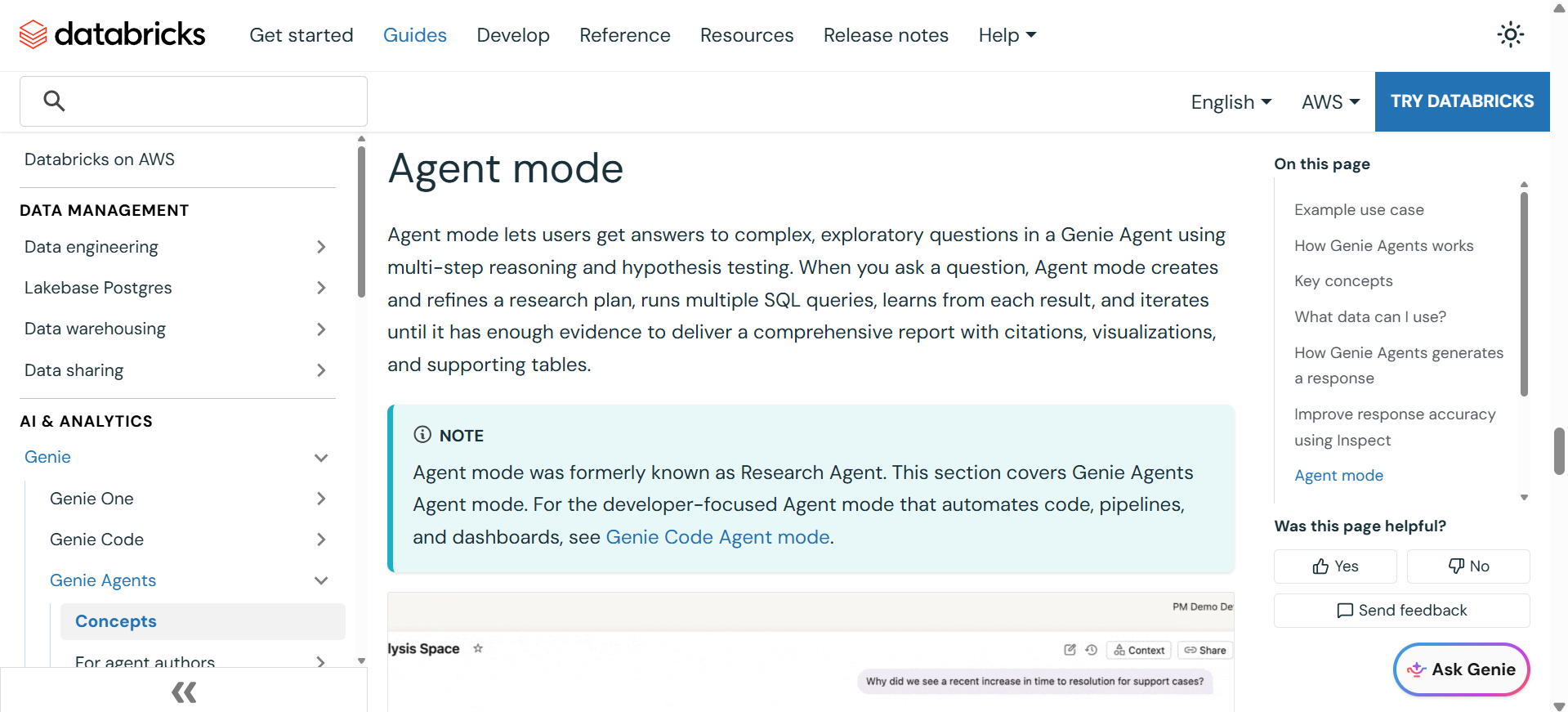
G2 rating (Databricks):4.6/5
What makes Databricks Genie stand out?
-
Agent mode scales effort to the question, examining possible causes and scenarios rather than just retrieving a single metric.
-
Genie Ontology, a business-aware map of the organization's terms, keeps answers aligned with shared definitions. Space owners can benchmark Genie against expected answers to track accuracy.
How does Databricks Genie keep agent actions secure and traceable?
Genie runs on the same governance layer as the rest of Databricks. Unity Catalog permissions ensure users only see data they are already allowed to access, and Genie Ontology aligns answers with shared business definitions.
Best for: Databricks customers who want business users to run deeper analysis without writing SQL.
Limitations:
-
Data and definitions need to be available to Genie through Databricks; Genie Ontology remains in public preview.
-
Some users find the platform takes time to learn and that serverless costs need close monitoring as compute use grows.
Pricing: Genie One and Genie Agents are free for users through January 31, 2027; query compute is billed separately. After that, usage-based pricing applies with a monthly per-user allowance.
Also read:9 Agentic Analytics Tools Compared: Governance, AI Depth, Integration
Best Agentic AI tools for research and knowledge work
Knowledge-work agents handle open-ended research and document tasks with almost no setup. A user describes the goal in plain language, and the agent delivers a finished result, such as a report or a working file.
4. Claude
Claude is Anthropic's AI assistant and agent for work. It handles multi-step research and analysis, delivers finished files, and connects to business apps through MCP connectors. Skills, Projects, and scheduled tasks support repeatable workflows.
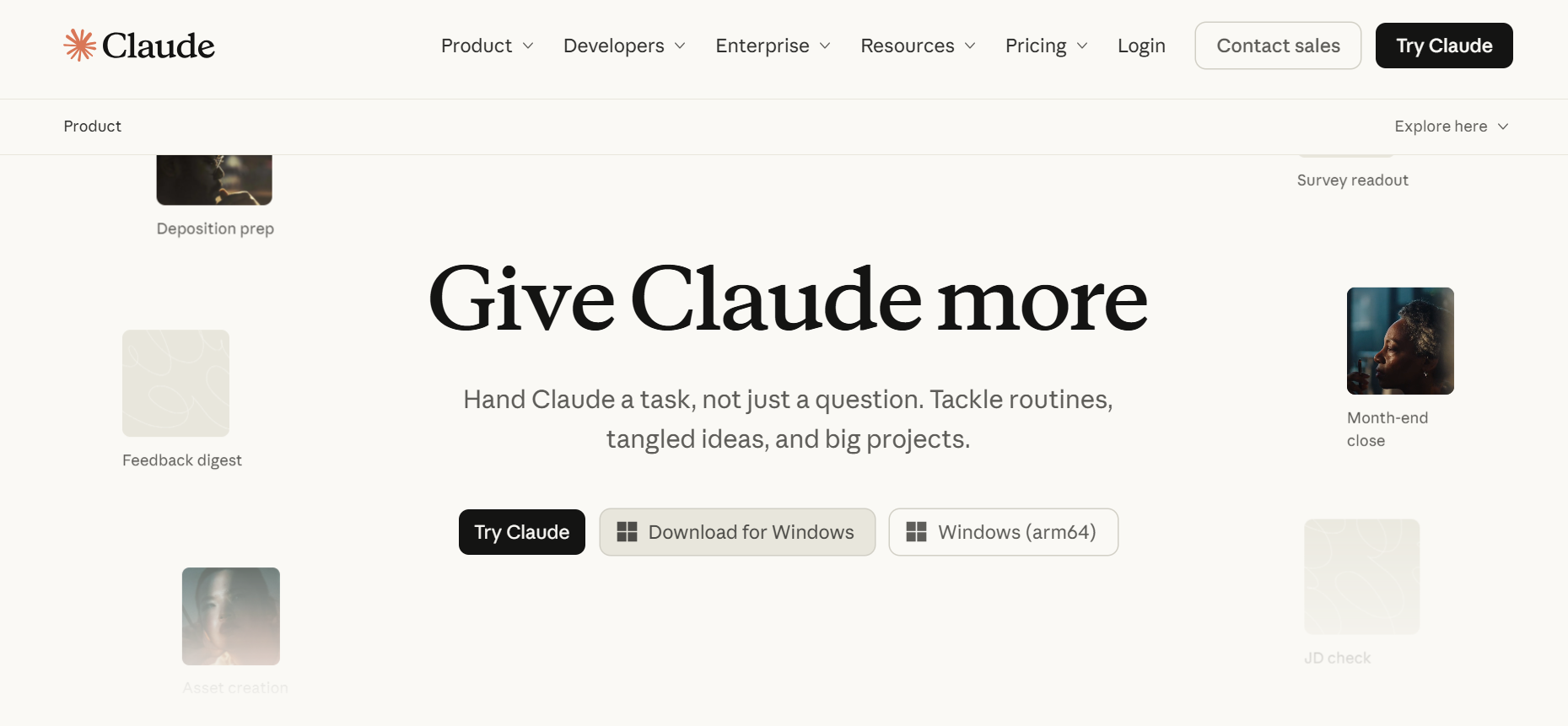
G2 rating: 4.6/5
What makes Claude stand out?
-
MCP connectors let Claude read information and take permitted actions in connected business tools, and it can turn requests into finished documents or spreadsheets.
-
Skills, Projects, and scheduled tasks support repeatable workflows, so teams can standardize recurring work without prompting each time.
How does Claude keep agent actions secure and traceable?
Team and Enterprise content is not used for model training by default. Team supports SSO and connector controls; Enterprise adds role-based access, SCIM, audit logs, a Compliance API, and custom retention settings.
Best for: Knowledge workers and teams who want a ready-to-use agent for research and document-heavy work.
Limitations:
-
Acting across company systems depends on which connectors are set up, so deeper automation takes some configuration.
-
User feedback suggests that usage limits can interrupt longer sessions, while generated code may need testing and adjustments to fit a project’s structure.
Pricing: A free plan is available; annually billed Pro starts at $17/month, Team at $20/seat/month, and Enterprise charges for seats plus usage.
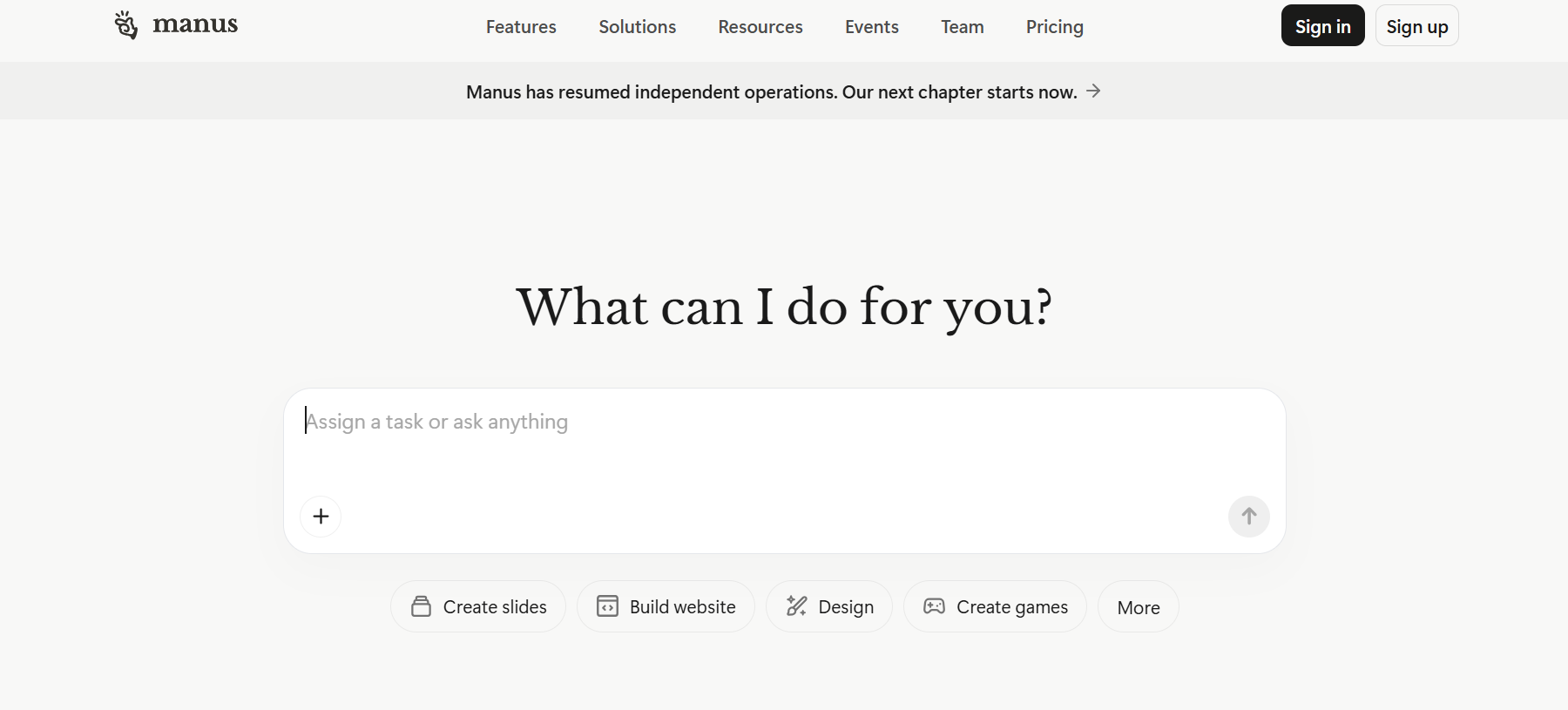
5. Manus
Manus is a general-purpose AI agent built to finish long, multi-step tasks on its own. Users hand over a goal, and Manus works through it in a cloud workspace, even while they're offline.
G2 rating: 4.6/5
What makes Manus stand out?
-
Designed for hands-off execution: it plans, researches, and builds outputs autonomously, and teams can run several tasks in parallel.
-
A cloud browser lets Manus browse and interact with websites in its own workspace, while app integrations and scheduled tasks support repeatable workflows.
How does Manus keep agent actions secure and traceable?
Manus reports SOC 2 Type II and ISO 27001 compliance. Model providers cannot train on Team or Enterprise customer data. SSO and sharing permissions control access, and audit logs support review.
Best for: Research-heavy teams that want an agent to run long tasks end to end with minimal supervision.
Limitations:
-
Autonomous runs offer fewer checkpoints than workflow builders, and complex tasks can use credits quickly.
-
User feedback on longer projects points to slower completion and occasional missed details from earlier instructions.
Pricing: A free plan includes daily credits. Paid plans add monthly credits, while Team pricing depends on seats and usage.
Top 3 No-code and low-code agentic AI tools for workflow automation
No-code agent builders let business teams create agents that act across everyday apps without writing code. Most grew out of automation platforms, so their agents can take real actions in tools the team already uses.
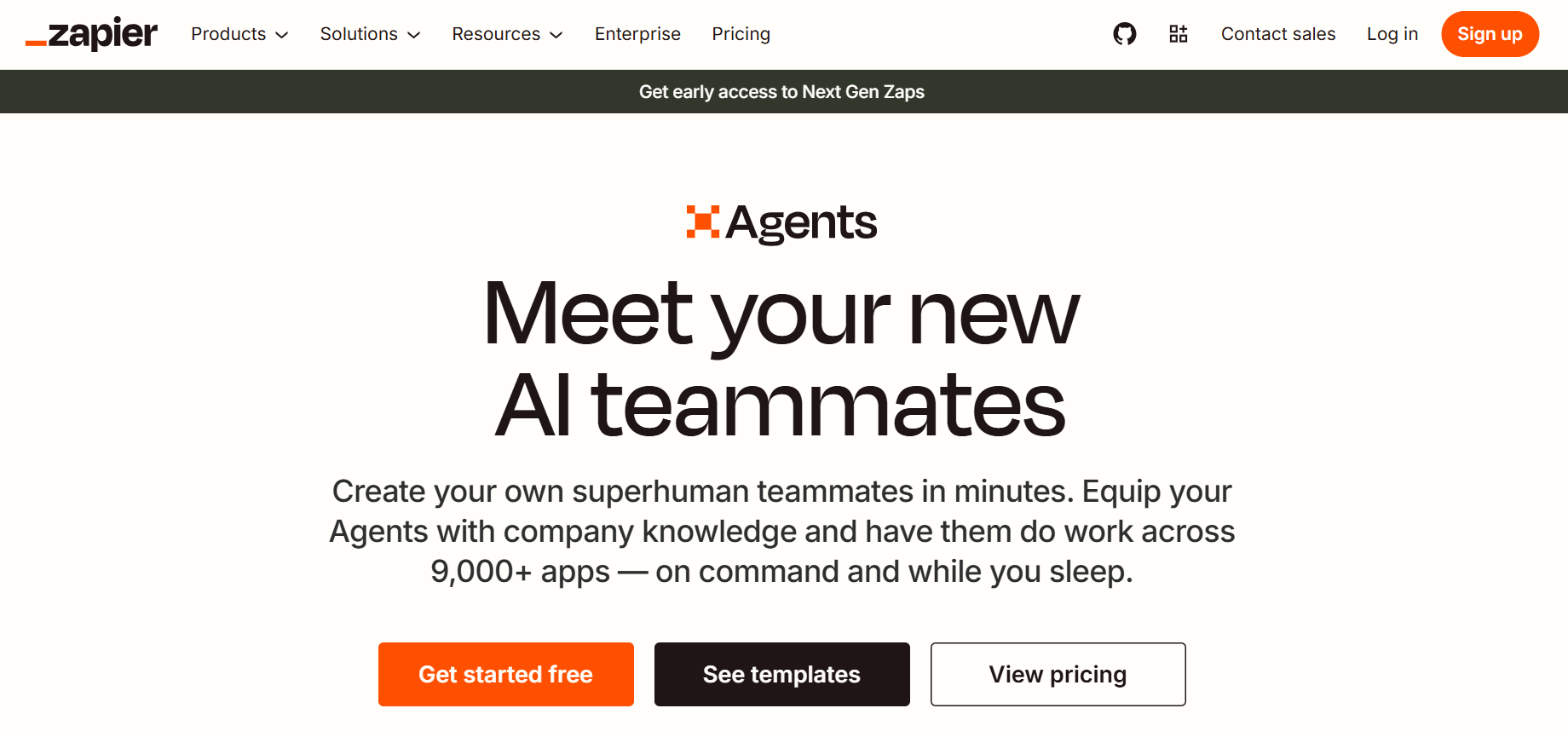
6. Zapier Agents
Zapier Agents brings AI agents to Zapier's automation platform. Teams describe a job in plain language, and the agent carries it out across connected apps, either on command or automatically. With 9,000+ app connections, agents can work across CRMs, help desks, and other business tools, checking connected sources for current information before acting.
G2 rating (Zapier): 4.5/5
What makes Zapier Agents stand out?
-
9,000+ app connections give agents unmatched reach across business tools, with live data checks and web research built in.
-
Schedules or app events can start an agent without a new prompt, so workflows run automatically.
How do Zapier Agents keep actions secure and traceable?
Agents can act only through the app connections and actions set up for them. Enterprise accounts support SAML SSO and SCIM provisioning. Agent activity logs show interactions with data; Enterprise adds audit logs.
Best for: Operations and marketing teams that want agents working across the SaaS apps they already use.
Limitations:
-
Complex workflows with loops and advanced branching may require workarounds or extra setup steps.
-
Agents do not currently support all Enterprise app and action restrictions, so teams should check their required controls before rollout.
Pricing: Agents are free for up to 400 activities a month. Agents Pro costs $33.33/month billed annually, and core Zapier plans start at $19.99/month.
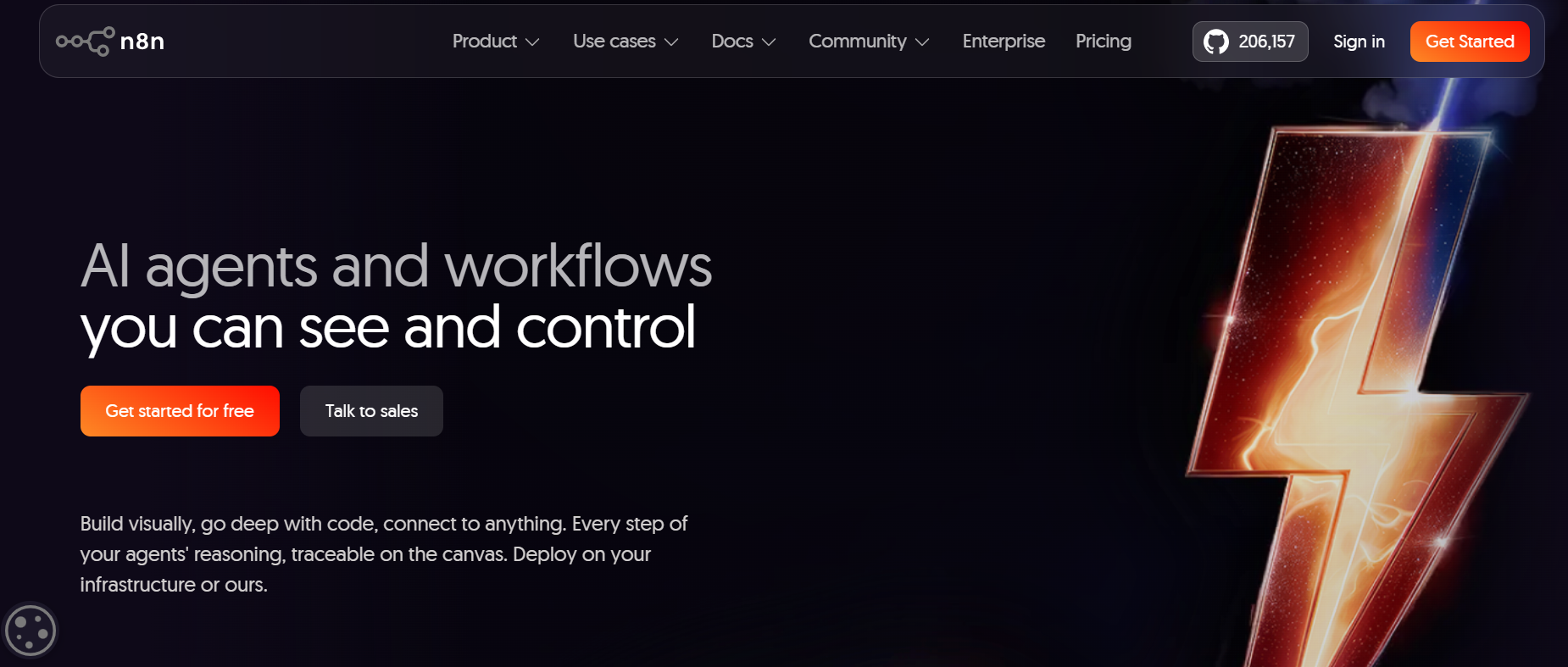
7. n8n
n8n is a workflow automation platform with a visual canvas and built-in AI agent nodes. It runs in n8n's cloud or self-hosted, with 1,000+ integrations, unlimited users, and both visual and code-based building.
G2 rating: 4.7/5
What makes n8n stand out?
-
Self-hosting lets teams run the free Community Edition or paid Business plan on their own infrastructure, keeping all data in-house.
-
The AI Agent node chooses which connected tools to call as it works through a task, and developers can add JavaScript or Python for complex logic.
How does n8n keep agent actions secure and traceable?
Workflows can pause for human approval before an agent calls a sensitive tool. Pro includes admin roles; self-hosted Business adds SAML or LDAP SSO. Enterprise adds audit logging, log streaming, and external secret store integration.
Best for: Technical teams that want flexible, self-hosted agent workflows with full control over their data.
Limitations:
-
User feedback on complex workflows points to setup friction with authentication and data mapping, plus errors that can take time to troubleshoot.
-
AI Assistant credits are limited on Cloud plans; teams running their own AI models may also need separate provider accounts.
Pricing: The self-hosted Community Edition is free. Cloud plans start at €20/month billed annually; self-hosted Business and Enterprise cost more.
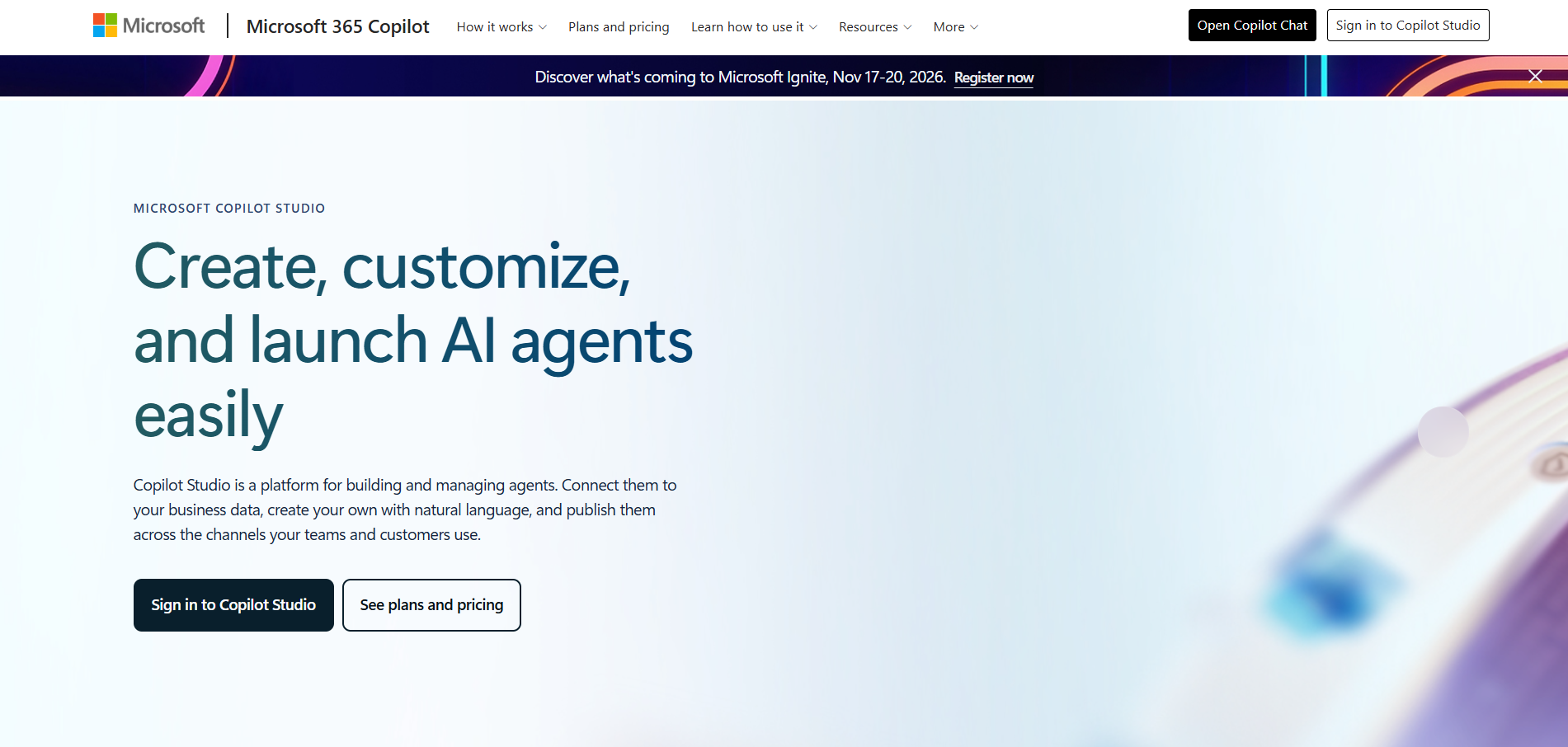
8. Microsoft Copilot Studio
Microsoft Copilot Studio is Microsoft's low-code platform for building agents that work inside Microsoft 365 and Power Platform. Agents can also be published to websites and other external channels. It brings agent building into Microsoft's business apps, identity system, and Power Platform tools.
G2 rating: 4.4/5
What makes Copilot Studio stand out?
-
Power Platform connectors let agents work across Microsoft and other business systems, and agents can pass specialized tasks to other connected agents.
-
Computer use lets agents interact with websites and desktop apps through their interfaces, and teams can deploy agents to channels beyond Microsoft 365.
How does Copilot Studio keep agent actions secure and traceable?
Agents inherit the controls Microsoft admins already manage. Power Platform policies govern which connectors agents can use, Microsoft Entra Agent ID manages agent permissions, the admin center tracks consumption, and Microsoft Purview supports compliance review.
Best for: Organizations standardized on Microsoft 365 that want business teams building governed agents.
Limitations:
- Feedback from first-time builders points to confusing setup and more work for advanced customization, especially outside Microsoft’s ecosystem.
-
Copilot Credit usage can add up as agents scale, so teams need to monitor consumption.
Pricing: Copilot Studio offers pay-as-you-go billing or capacity packs at $200/month for 25,000 Copilot Credits; Microsoft 365 Copilot plans have separate pricing.
4 Best Agentic AI frameworks and cloud platforms for developers
Developer frameworks and cloud agent platforms give engineering teams full control over how agents are built and run. Frameworks supply the building blocks in code, and cloud platforms add the managed infrastructure needed to run agents in production.
9. LangChain and LangGraph
LangChain is an open-source framework for building agents on large language models. LangGraph, from the same team, adds graph-based control for stateful, multi-step workflows. LangSmith handles tracing, evaluation, and deployment, including managed or dedicated infrastructure options.
G2 rating (LangChain): 4.5/5
What makes LangChain and LangGraph stand out?
-
LangGraph lets developers define branching and looping paths for complex tasks, with persistent state so agents retain context and can resume interrupted work.
-
Teams can swap models and tools without rebuilding the workflow, and LangSmith can deploy agents on managed or dedicated infrastructure.
How do LangChain and LangGraph keep agent actions secure and traceable?
LangSmith lets teams inspect agent runs and test outputs against datasets. Workflows can pause for human review or edits before continuing. LangSmith Enterprise adds SSO, role-based access, and self-hosted or hybrid deployment.
Best for: Engineering teams building custom agents that need fine-grained control over every step.
Limitations:
-
Teams must design and maintain many production controls themselves, including what agents can access and do.
-
Developer feedback points to abstractions that can complicate simple tasks and debugging, plus frequent updates that require compatibility checks.
Pricing: LangChain and LangGraph are free; LangSmith offers one free seat, $39/seat/month Plus, and custom Enterprise pricing with usage fees.
10. CrewAI
CrewAI is a framework and platform for building teams of AI agents that each play a defined role. Developers work in Python, and the hosted platform adds a visual editor and AI copilot for designing and deploying crews.
G2 rating: 4.2/5
What makes CrewAI stand out?
-
Role-based agents each have a defined goal and tools, and can delegate tasks to one another as a crew completes a process.
-
Built-in execution traces and OpenTelemetry support are available on the free platform plan, with a Visual Studio for designing crews without code.
How does CrewAI keep agent actions secure and traceable?
Workflows can pause at selected steps for human input. Enterprise adds SSO, role-based access, PII redaction, policy controls, and private deployment in a customer's VPC or on their own infrastructure.
Limitations:
-
User feedback on initial setup points to a learning curve across agents, tasks, tools, memory, and Flows.
-
As crews grow, more agent interactions can make debugging harder and increase model token costs.
Pricing: The open-source framework is free, and the hosted platform includes 50 free executions a month. Enterprise pricing is custom.
11. Amazon Bedrock AgentCore
Amazon Bedrock AgentCore is AWS's managed platform for running agents in production. It hosts agents built in popular frameworks with any model and supplies the infrastructure they need at scale. Teams keep their chosen agent framework while getting managed production services.
G2 rating (AWS Bedrock): 4.4/5
What makes Amazon Bedrock AgentCore stand out?
-
Framework-agnostic runtime deploys agents built with LangGraph, OpenAI Agents SDK, or other frameworks, with managed memory that retains context across sessions.
-
Browser and code tools run in isolated environments, and the Gateway turns existing APIs into agent tools with controls over tool calls.
How does Amazon Bedrock AgentCore keep agent actions secure and traceable?
Gateway tool calls can be checked against access policies before they run, with automated reasoning to validate those policies. The Identity service manages agent authentication and credentials. Amazon CloudWatch shows agent activity, tool calls, and performance data.
Limitations:
-
Costs spread across model usage, retrieval, and managed services can make spending harder to forecast.
-
Model and service availability can vary by AWS Region, adding planning work for teams operating across regions.
Pricing: Pay-as-you-go, with each service metered separately. New AWS customers get up to $200 in free tier credits.
12. Gemini Enterprise Agent Platform
Gemini Enterprise Agent Platform, formerly Vertex AI, is Google Cloud's platform for building and running agents in production. Developers work in code with the Agent Development Kit, and Agent Studio offers a low-code path. Model Garden provides access to 200+ models, including Google and partner models.
G2 rating: 4.3/5
What makes Gemini Enterprise Agent Platform stand out?
-
The Agent Development Kit is open-source and supports single-agent and multi-agent development across several languages, with Agent Studio as a low-code alternative.
-
Model Garden offers 200+ models, and the Gemini Enterprise app gives employees access to governed agents through one interface.
How does Gemini Enterprise Agent Platform keep agent actions secure and traceable?
The Agent Registry lets teams centrally inventory and govern agents and tools. Cloud IAM assigns permissions to agents and the resources they use. Logs, traces, and dashboards show agent activity and performance.
Best for: Google Cloud customers building production agents that need broad model choice.
Limitations:
-
Getting started involves a learning curve with Google Cloud permissions and extra setup when connecting non-Google tools.
-
As agents and data volumes grow, charges across models, runtime, and other services can become harder to forecast.
Pricing: Pay-as-you-go, based on model usage and runtime resources. New customers get $300 in free credits.
Also read: The 10 Best AI Agent Platforms and How to Choose the Right One
How teams can choose the right agentic AI tool for their workflow
The right agentic AI tool depends first on the workflow it will run and then on the skills of the team that will own it. Start by matching the agent to the type of work, then consider who will build, maintain, and govern it.
For governed answers from company data across multiple systems, shortlist askEdgi, Snowflake Intelligence, and Databricks Genie. These tools are suited to teams that need agents to work with enterprise data while maintaining appropriate governance and access controls.
For research, analysis, and document-heavy work with minimal setup, Claude and Manus are options for business users. They can support knowledge-work tasks without requiring teams to build complex agent workflows from scratch.
For automating tasks across SaaS applications, consider Zapier Agents and Microsoft Copilot Studio. These tools fit business users and no-code teams that need agents to connect applications and automate routine workflows.
For self-hosted workflows where data needs to remain in-house, n8n is a suitable option for technical teams working with low-code workflows.
For custom multi-agent systems, developers can shortlist CrewAI and LangChain with LangGraph. These frameworks provide more control over how agents are structured, coordinated, and connected to tools.
For production agents built around a specific cloud platform, Amazon Bedrock AgentCore and Gemini Enterprise Agent Platform are options for development teams that want cloud-native agent capabilities.
Once you have a shortlist, run a short pilot on one real workflow to see how the tool performs with company data.
Gartner expects over 40% of agentic AI projects to be canceled by the end of 2027, often because costs climb or the business value remains unclear. A structured pilot can help teams identify these issues early.
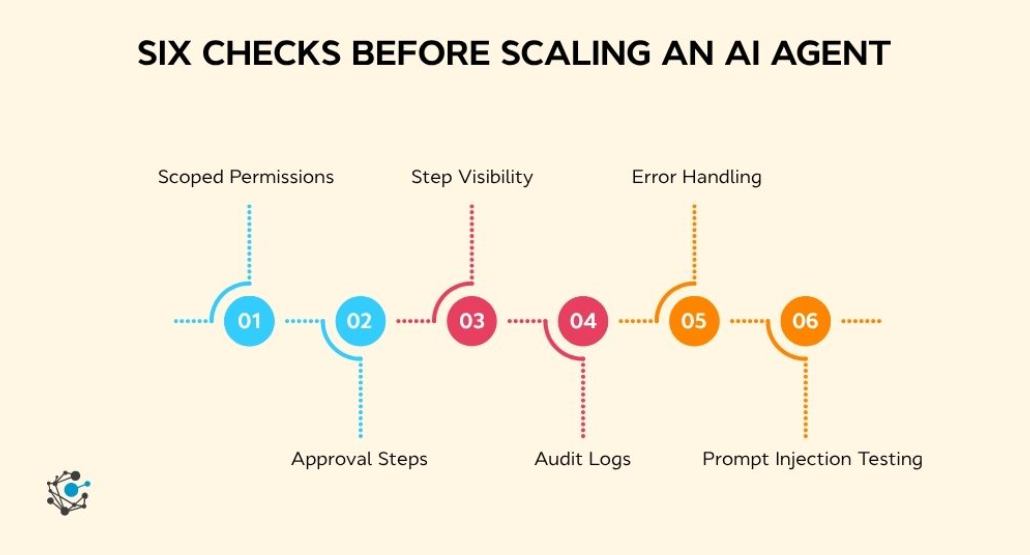
Before expanding an agent, confirm these six checks:
-
Scoped permissions: The agent reaches only the data and systems the pilot needs, and access is checked before every action. Many teams enforce these rules through their existing AI governance tools.
-
Approval steps: A person approves sensitive actions, such as sending messages or changing records, until the agent proves reliable.
-
Step visibility: Reviewers can see the plan the agent followed and each action it took.
-
Audit logs: Logs record what the agent did, so any result can be explained later.
-
Error handling: The agent stops safely and flags the issue when a step fails or an input looks wrong.
-
Prompt injection testing: The team tests how the agent handles instructions hidden in content it reads, such as web pages or emails. OWASP ranks prompt injection as the top risk for LLM applications.
Where OvalEdge fits
Every check on this list depends on the data underneath the agent. Platforms like OvalEdge provide that foundation through an Enterprise Context Graph, a shared context layer for AI agents that connects business meaning with the rules that govern data. Four elements do most of the work:
-
Shared definitions: Agents work from certified business terms, so they don't have to guess what a metric means.
-
Lineage: End-to-end data lineage traces every answer back to its upstream sources.
-
Access policies: Permissions are checked before an agent queries data or takes an action.
-
Quality signals: Quality scores and certifications let agents factor trust into their reasoning.
OvalEdge expert insight: Before scaling any agent, test it on one metric the business often debates, such as active customers. If the agent returns the certified number and can show where it came from, the data foundation is ready.
Conclusion
Agentic AI tools deliver the most value when teams start small and scale with confidence. Start with one workflow and shortlist tools that match the team's skills. Then run a pilot on real company data before expanding.
OvalEdge makes that pilot easier to trust. Its Enterprise Context Graph grounds every agent in certified business definitions. askEdgi turns those definitions into governed answers that trace back to their source. Access rules apply before any agent acts, so teams can scale agents without losing control.
Book a demo to see how OvalEdge helps teams put reliable agents to work on governed data.
.png?width=1081&height=173&name=Forrester%201%20(1).png)
.png?width=1081&height=241&name=KC%20-%20Logo%201%20(1).png)