

Data Catalog
Search smarter. Understand faster. Act confidently.
With the OvalEdge data catalog, unify your metadata across data sources, enrich it with context and collaboration, and empower every team to search, understand, and act on it seamlessly.
TRUSTED BY


Connect to every data source. Capture all metadata.
The OvalEdge platform connects to your entire data ecosystem and captures both active and extended metadata, delivering the depth and context needed for effective governance and discovery.
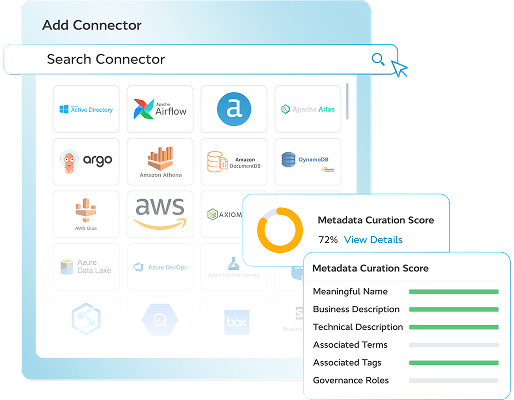
150+ native connectors
Integrate with data warehouses, BI tools, CRMs, ERPs, and more, no custom code needed.
Active metadata support
Capture metadata that changes frequently, including user behaviors, data usage, and access logs essential for governance and auditing.
Extended metadata extraction
Go beyond surface-level metadata. OvalEdge brings in metadata like user roles, access permissions, domain types, and source-specific attributes (e.g., Salesforce objects, Tableau dashboards).
Turn raw metadata into trusted, contextual intelligence.
Automate what you can, accelerate what you can’t.
.svg)
Automate
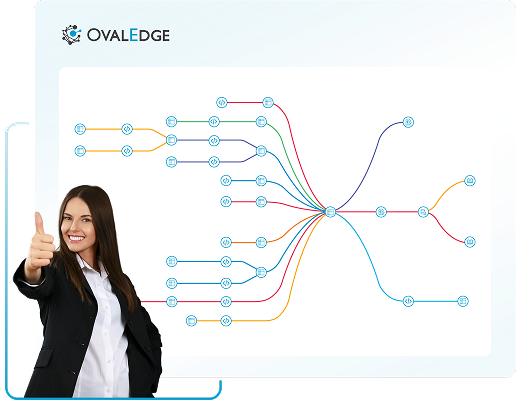
OvalEdge automates foundational curation tasks like:
- Lineage generation: Automatically builds data flow diagrams across systems using proprietary algorithms.
- PII detection & classification: Identifies sensitive information like personal identifiers and tags them for governance use.
- Auto-classification: Applies business categories based on naming patterns, domains, and usage behavior.

Prioritize
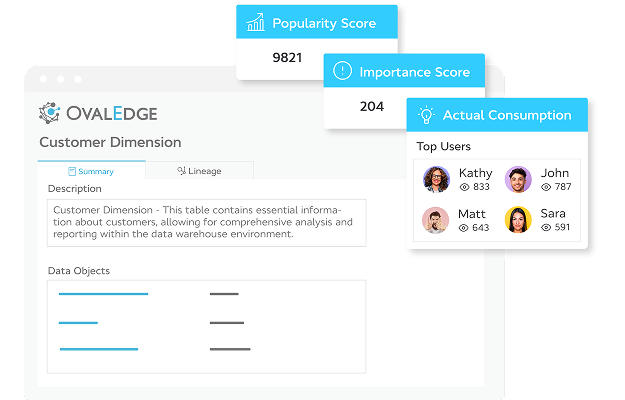
Not all data needs curation. OvalEdge helps you focus on what’s critical first. With built-in analytics, you can prioritize curation efforts based on:
- Popularity score: How often a dataset is used
- Importance score: Its relevance to business processes
- Actual consumption: Usage tracked across systems

Delegate
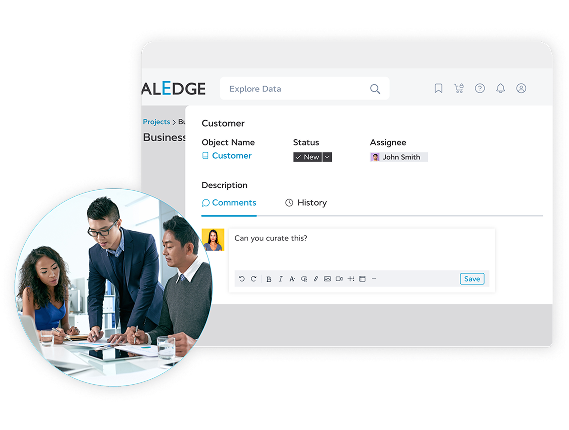
OvalEdge makes delegation easier with:
- Research-driven steward assignment: Match the right person to the right dataset—even within a single schema
- Collaborative delegation: Reassign tasks, share workload, and track progress seamlessly
- Automated suggestions: Recommend stewards based on asset ownership, domain knowledge, and past curation behavior

Contextualize
.png?width=521&height=400&name=3.1_V1%201%20(1).png)
OvalEdge helps teams enrich metadata with business definitions, logic, and commentary using:
- AI-powered question wall: Guides stewards through contextual curation by asking structured, easy-to-answer questions
- Escalation to SMEs: If a steward doesn’t know the answer, they can route the question to a subject matter expert
- Built-in collaboration: Add glossary terms, descriptions, and usage notes directly into the catalog
OvalEdge automates foundational curation tasks like:
- Lineage generation: Automatically builds data flow diagrams across systems using proprietary algorithms.
- PII detection & classification: Identifies sensitive information like personal identifiers and tags them for governance use.
- Auto-classification: Applies business categories based on naming patterns, domains, and usage behavior.
Not all data needs curation. OvalEdge helps you focus on what’s critical first. With built-in analytics, you can prioritize curation efforts based on:
- Popularity score: How often a dataset is used
- Importance score: Its relevance to business processes
- Actual consumption: Usage tracked across systems
OvalEdge makes delegation easier with:
- Research-driven steward assignment: Match the right person to the right dataset—even within a single schema
- Collaborative delegation: Reassign tasks, share workload, and track progress seamlessly
- Automated suggestions: Recommend stewards based on asset ownership, domain knowledge, and past curation behavior
OvalEdge helps teams enrich metadata with business definitions, logic, and commentary using:
- AI-powered question wall: Guides stewards through contextual curation by asking structured, easy-to-answer questions
- Escalation to SMEs: If a steward doesn’t know the answer, they can route the question to a subject matter expert
- Built-in collaboration: Add glossary terms, descriptions, and usage notes directly into the catalog
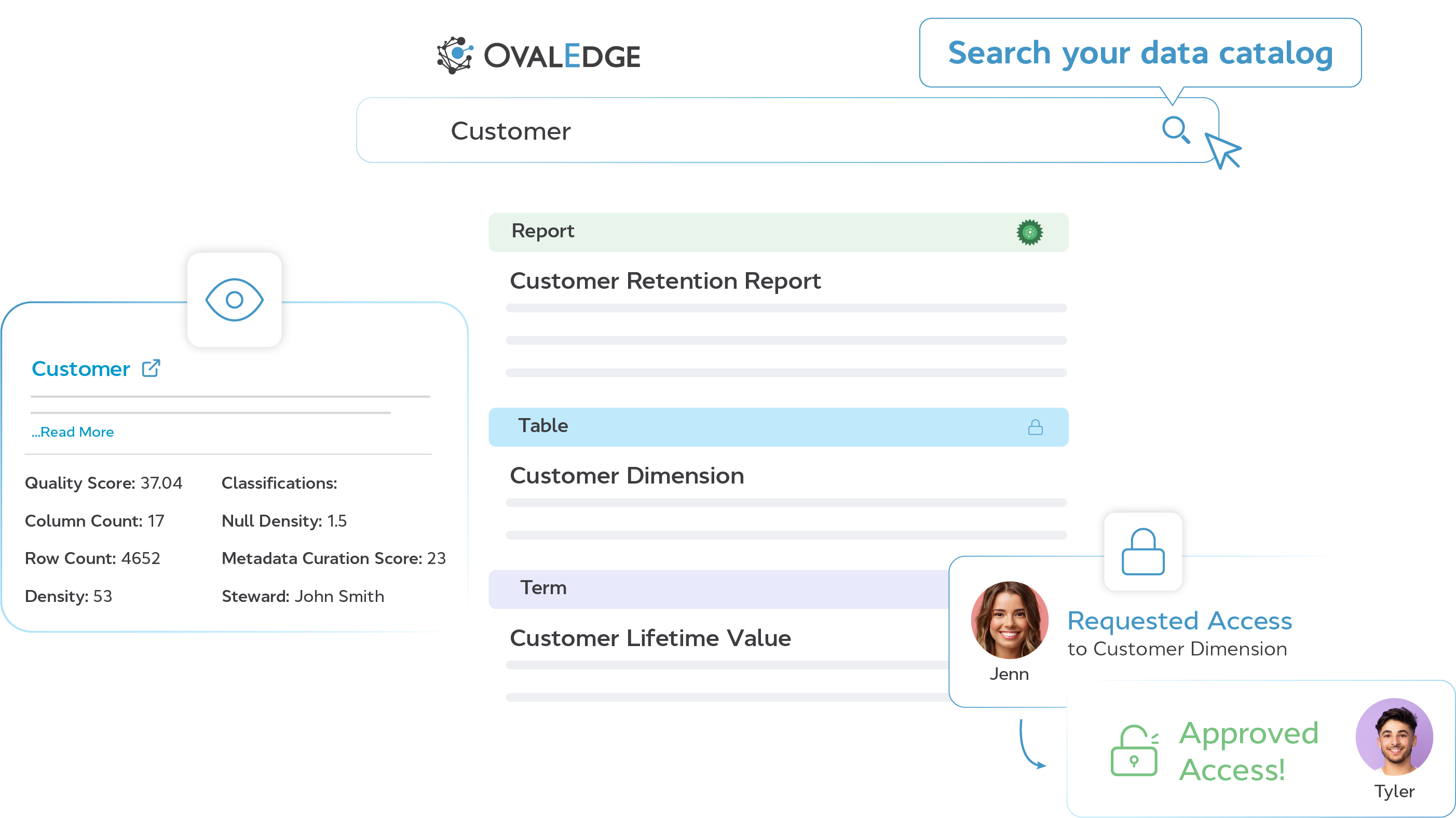
Go beyond searching. Research enriched metadata.
Whether you’re a business user, data engineer, or security analyst, OvalEdge lets you search, explore, and research curated, contextual data, through natural language, guided filters, or intuitive grid views.
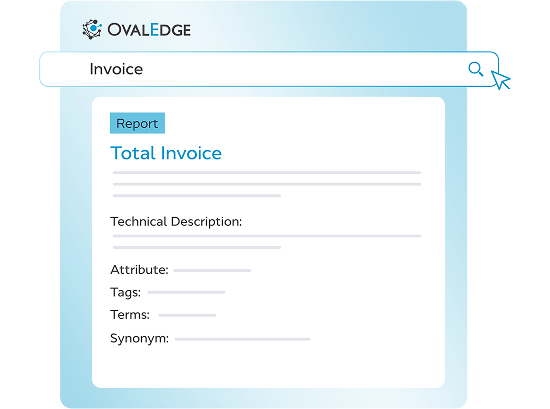
Google-style keyword search
For pinpointing known assets like “customer_orders” or “invoice data.”
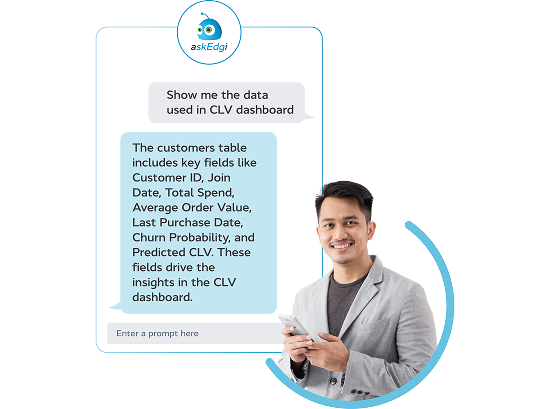
ChatGPT-style insights for business users
Ask, “Show me customer tables used in dashboards” and get direct, relevant results.
Exploratory navigation
Browse data domains intuitively, like flipping through a well-organized catalog or browsing a bookstore.
.png?width=432&height=409&name=AskEdgi%20Graphic_V3%201%20(1).png)
Understand data with context, clarity, & collaboration
OvalEdge helps every user—business or technical—make sense of data with tailored views, detailed profiles, and built-in collaboration.

Comprehensive data profiles
View lineage, technical attributes, usage, relationships, policies, and business definitions, all in one place.

Customizable layouts
Personalize views by role, team, or region. Hide irrelevant fields and surface what matters most.

Ask & collaborate
Comment, tag stewards, and build a living knowledge base, integrated with Slack, Jira, ServiceNow, and more.
From understanding to action, without leaving the catalog
OvalEdge goes beyond discovery, so every team can take action directly from the catalog. Request access, analyze data, or enforce policies without switching platforms.
.png?width=674&height=460&name=Asset%202%201%20(1).png)
Access workflows for business users
Request access to datasets within OvalEdge, no separate ticketing tools needed. Integrated approvals through tools like Jira and ServiceNow ensure visibility and compliance.
Built-in analysis for data teams
Use natural language interfaces to ask questions, check data quality, and explore metrics, then launch into connected BI tools or notebooks with ease.
Policy enforcement for stewards & security
Tag sensitive data, apply masking policies, and automate access controls, all while staying inside the catalog. Governance happens where discovery does.
Proven by customer successes across industries

.png?width=151&height=151&name=Mask%20group%20(18).png)
How Delta Community Credit Union enhanced its data governance with OvalEdge
"We have seen dramatic results across the board by implementing these programs, centralizing our metadata with the OvalEdge data catalog, and enabling self-service data education."
Dr. Su Rayburn
Vice President, Information Management & Analytics

.png?width=151&height=151&name=Mask%20group%20(19).png)
Bedrock leverages OvalEdge to standardize definitions, improve data accuracy
"OvalEdge stands out for its holistic approach, providing everything from business glossary to data lineage, all seamlessly integrated. The auto-lineage feature saves us months of work, enabling us to quickly understand data flows and address issues at the source.”
Sergei Vandalov
Senior Manager, Data Governance & Analytics

.png?width=151&height=151&name=Mask%20group%20(20).png)
Gousto’s continued data governance journey to deliver exceptional customer experience
“Incorrect pricing, nutritional or allergen information can disrupt the customer experience. With quality data at every stage, Gousto aligns its customer promise with operational excellence.”
Cathy Pendleton
Senior Manager - Data Governance
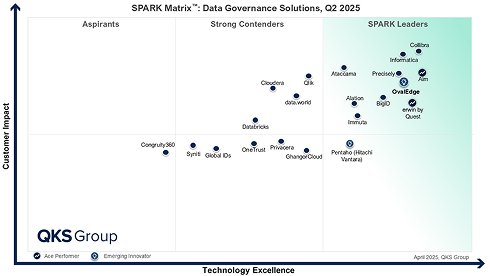
OvalEdge Recognized as a Leader in Data Governance Solutions
.png?width=1081&height=173&name=Forrester%201%20(1).png)
“Reference customers have repeatedly mentioned the great customer service they receive along with the support for their custom requirements, facilitating time to value. OvalEdge fits well with organizations prioritizing business user empowerment within their data governance strategy.”
.png?width=1081&height=241&name=KC%20-%20Logo%201%20(1).png)
“Reference customers have repeatedly mentioned the great customer service they receive along with the support for their custom requirements, facilitating time to value. OvalEdge fits well with organizations prioritizing business user empowerment within their data governance strategy.”
Gartner, Magic Quadrant for Data and Analytics Governance Platforms, January 2025
Gartner does not endorse any vendor, product or service depicted in its research publications, and does not advise technology users to select only those vendors with the highest ratings or other designation. Gartner research publications consist of the opinions of Gartner’s research organization and should not be construed as statements of fact. Gartner disclaims all warranties, expressed or implied, with respect to this research, including any warranties of merchantability or fitness for a particular purpose.
GARTNER and MAGIC QUADRANT are registered trademarks of Gartner, Inc. and/or its affiliates in the U.S. and internationally and are used herein with permission. All rights reserved.