Activate Agentic Data Governance
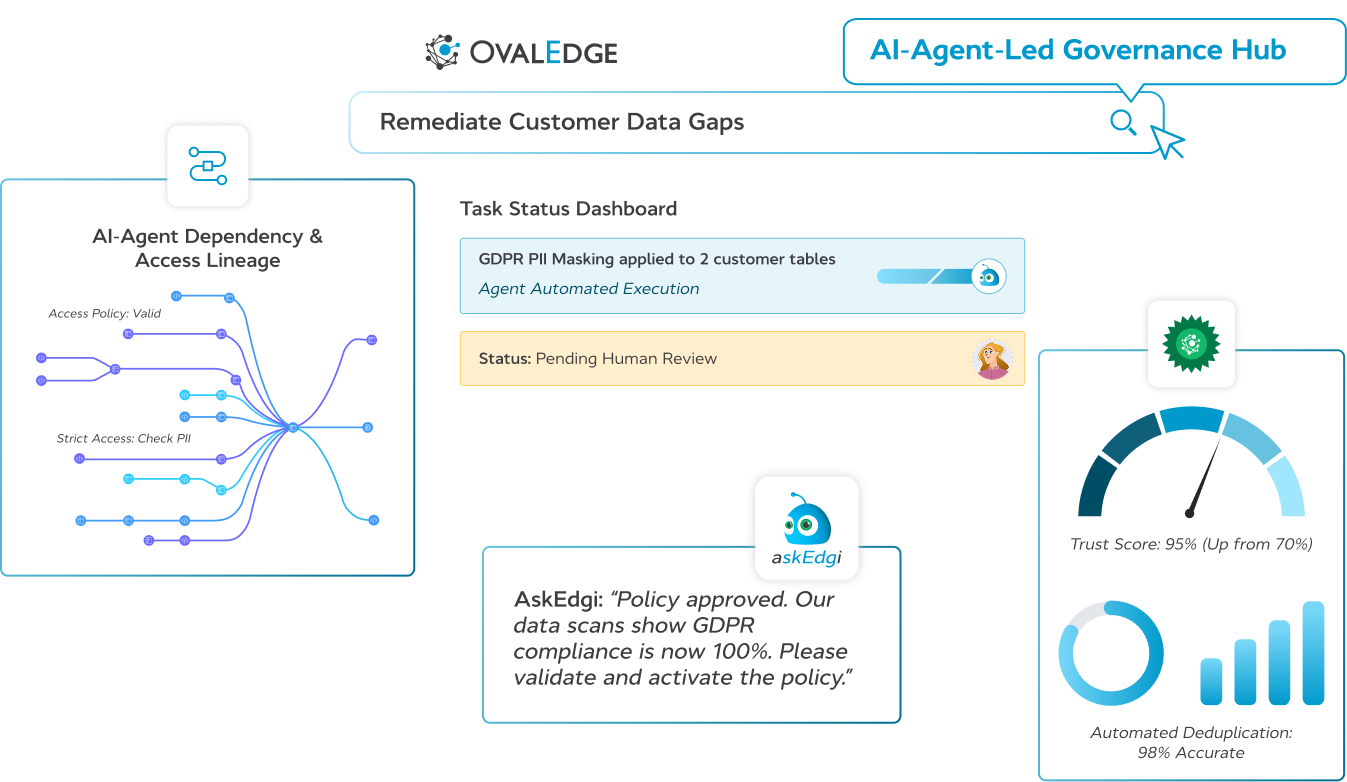
Fix data trust, quality, access, and compliance in weeks, not years. OvalEdge agents automate the workflows, while humans validate and guide decisions.
TRUSTED BY


Data Governance is Broken. Let’s fix it.
Traditional data governance is manual and fragmented, so adoption stays low. Agentic data governance makes governance AI-driven by default, with humans in control, so cycles become fast, repeatable, and adoptable.
Data Governance

Manual by Default

Disconnected Tools

Slow Governance Cycles

Low Business Adoption

Governance Becomes a Program
Agentic Data Governance

AI-Driven by Default

Unified Governance Platform

Fast, Repeatable Cycles

High Business Adoption

Governance Becomes a Practice
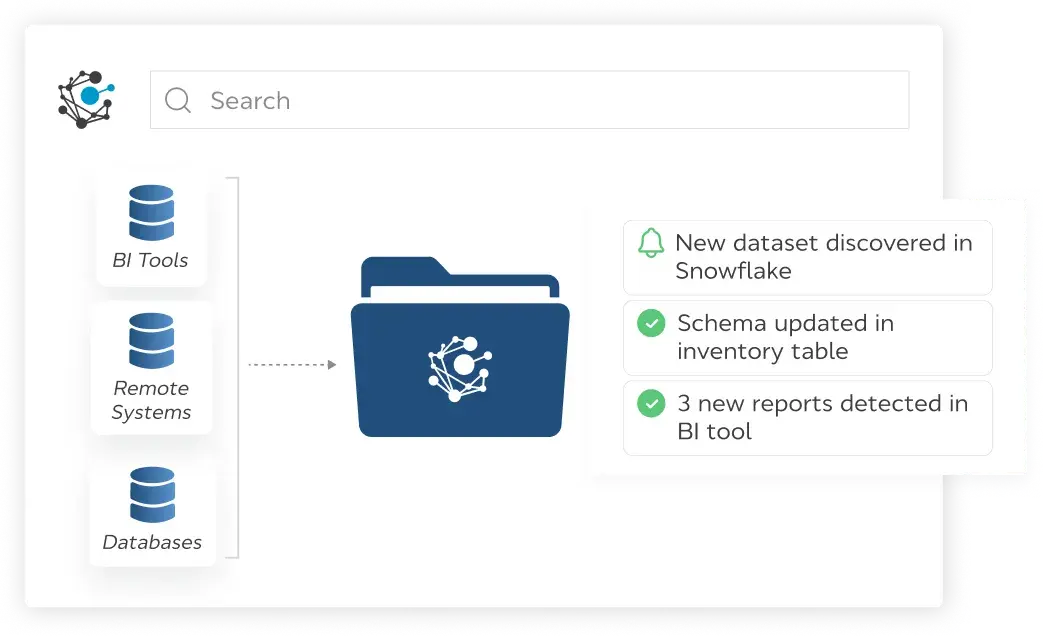
Discover and Organize Data
Get always-on visibility into data across all systems.

OvalEdge agents AI agents continuously scan and classify data across all systems using 150+ out-of-the-box connectors.

Humans stay automatically informed as data changes across systems.
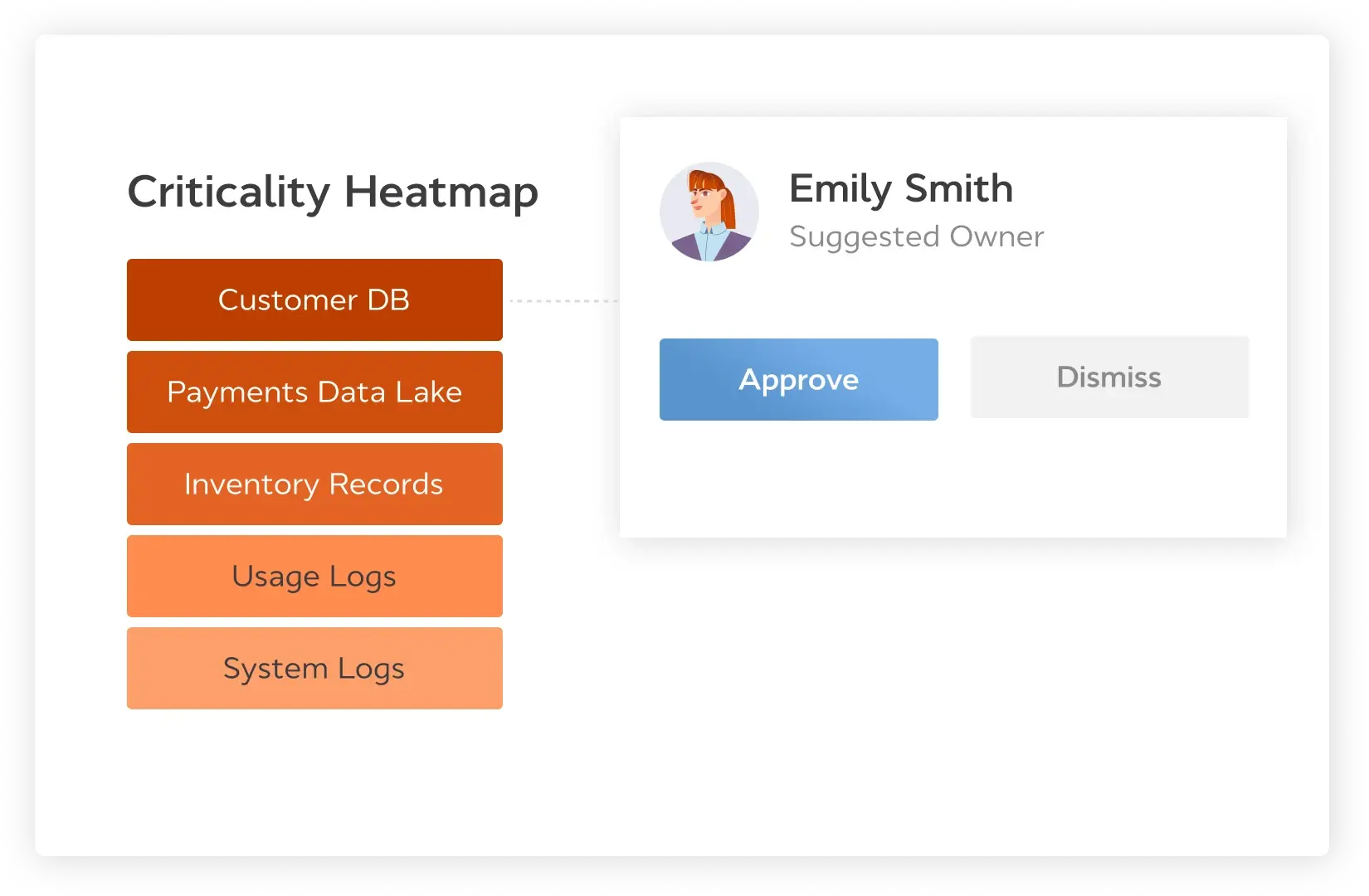
Identify and Own Critical Data
Apply governance effort where it drives real business impact.
OvalEdge agents analyze usage, impact, downstream dependencies, sensitivity, etc., to identify criticality and suggest owners & stewards.
Humans confirm assignments and handle exceptions.
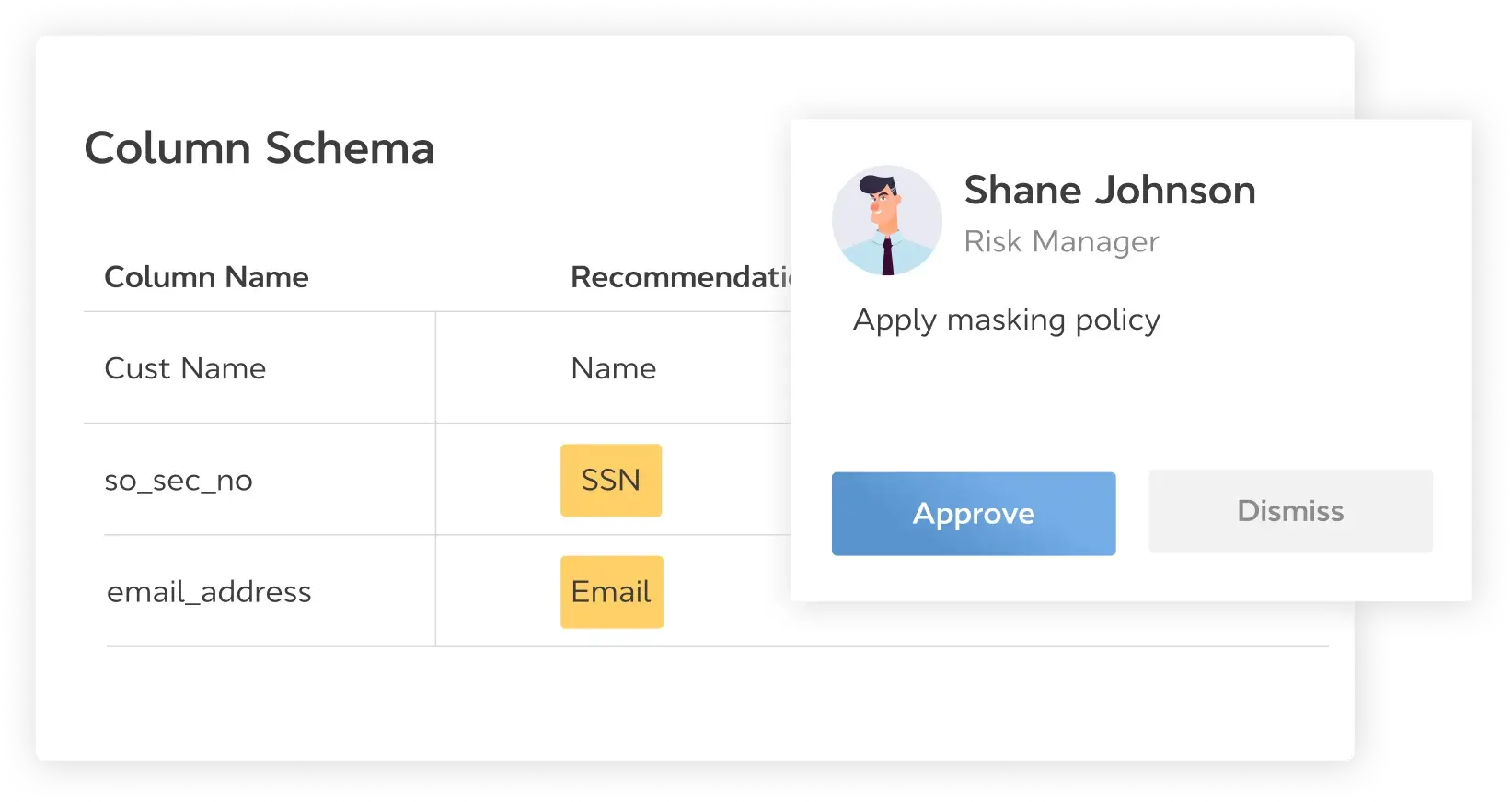
Detect and Track Sensitive Data
Enforce consistent privacy, access control, and governance across all data.
OvalEdge agents detect and classify sensitive data at the column level, track movement and duplication across systems, and surface risky exposures and violations.
Humans define masking/handling rules and validate edge cases so privacy governance runs continuously with minimal effort.
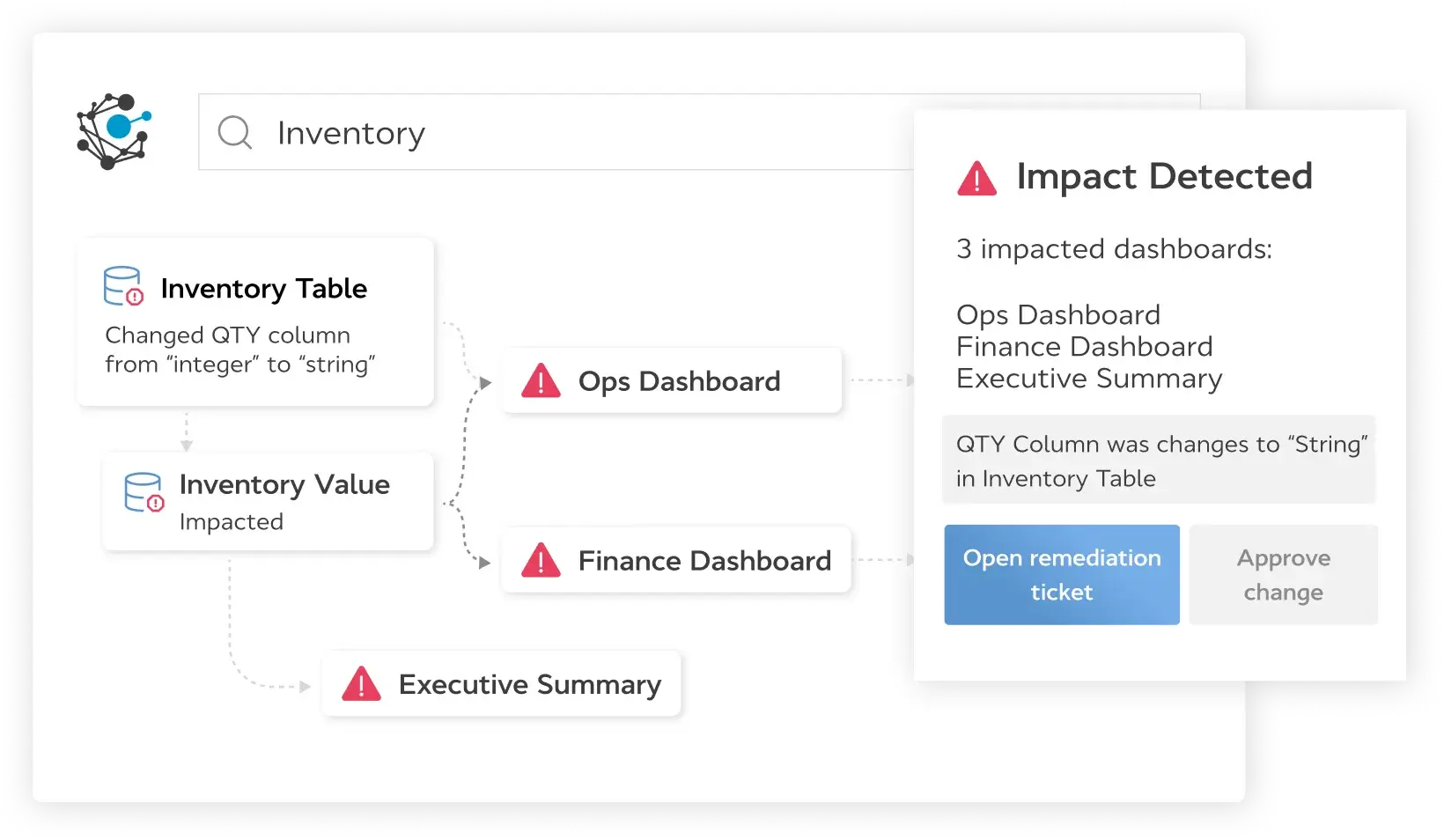
Trace Lineage and Predict Change Impact
Provide traceability for compliance, quality, and impact analysis.
OvalEdge agents build and maintain lineage automatically at the column level, and highlight impacted dashboards and recommended actions.
Humans approve masking and handling rules and validate edge cases.
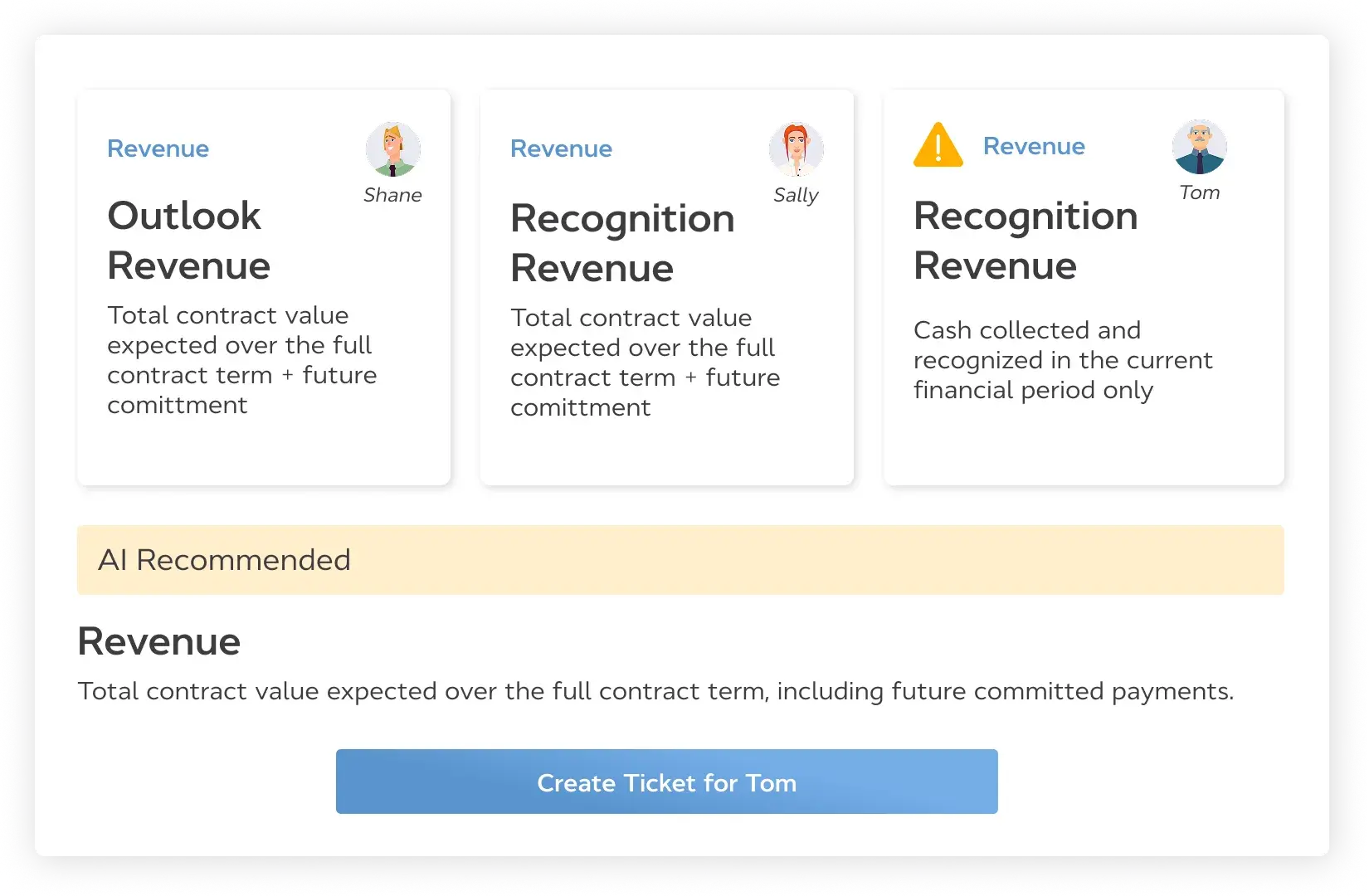
Keep Definitions Aligned With Business Usage
Prevent inconsistent metrics and misinterpreted reports across teams.
OvalEdge agents propose definitions, detect conflicts, and link glossary terms to the physical data assets.
Humans review, confirm, and refine proposed definitions.
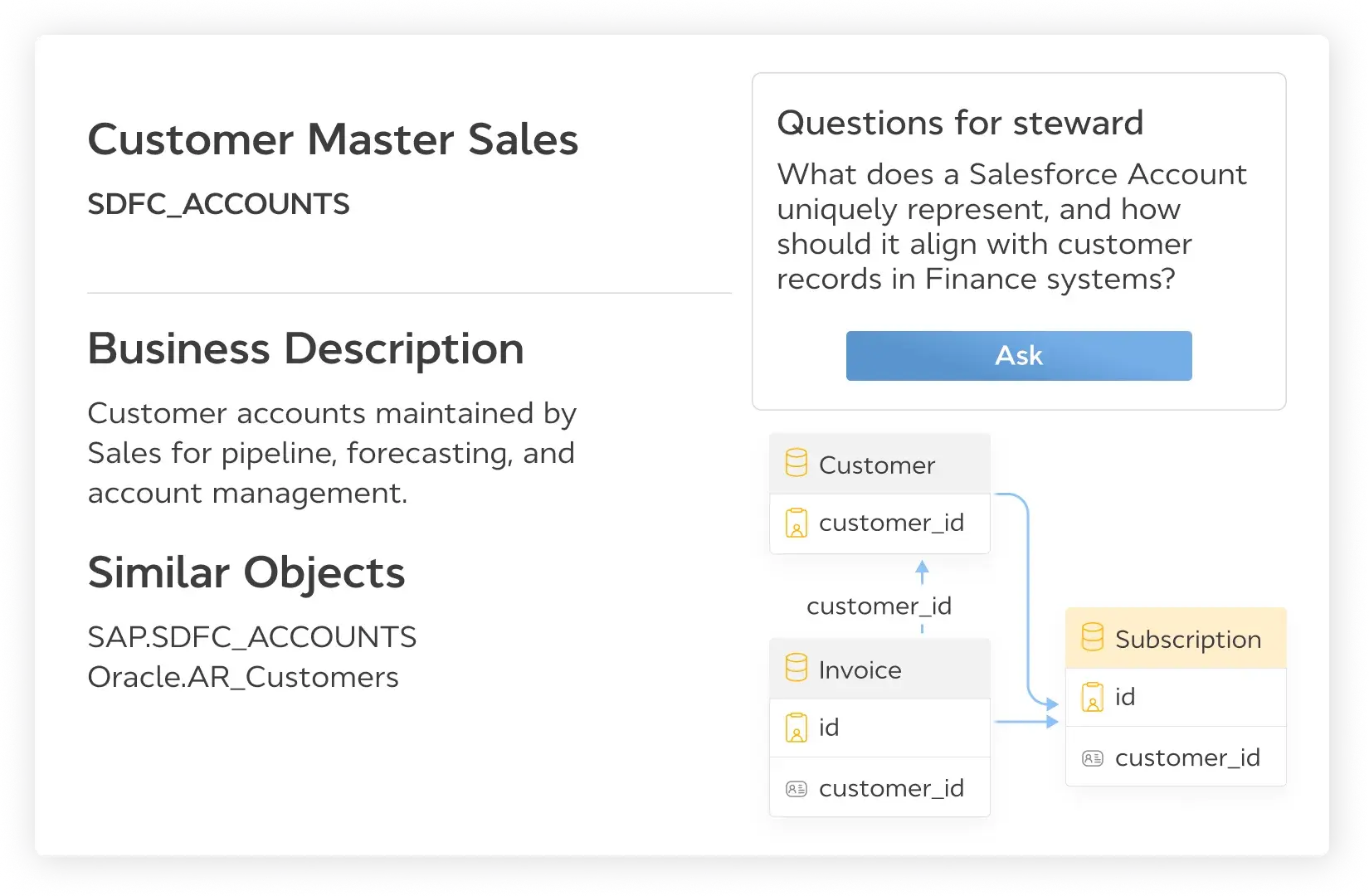
Curate Business Context
Build a high-quality, trusted knowledge base.
OvalEdge agents automatically generate business context including descriptions, tags, and ER context, detect gaps, and ask targeted questions.
Humans answer questions, validate content, and flag exceptions.
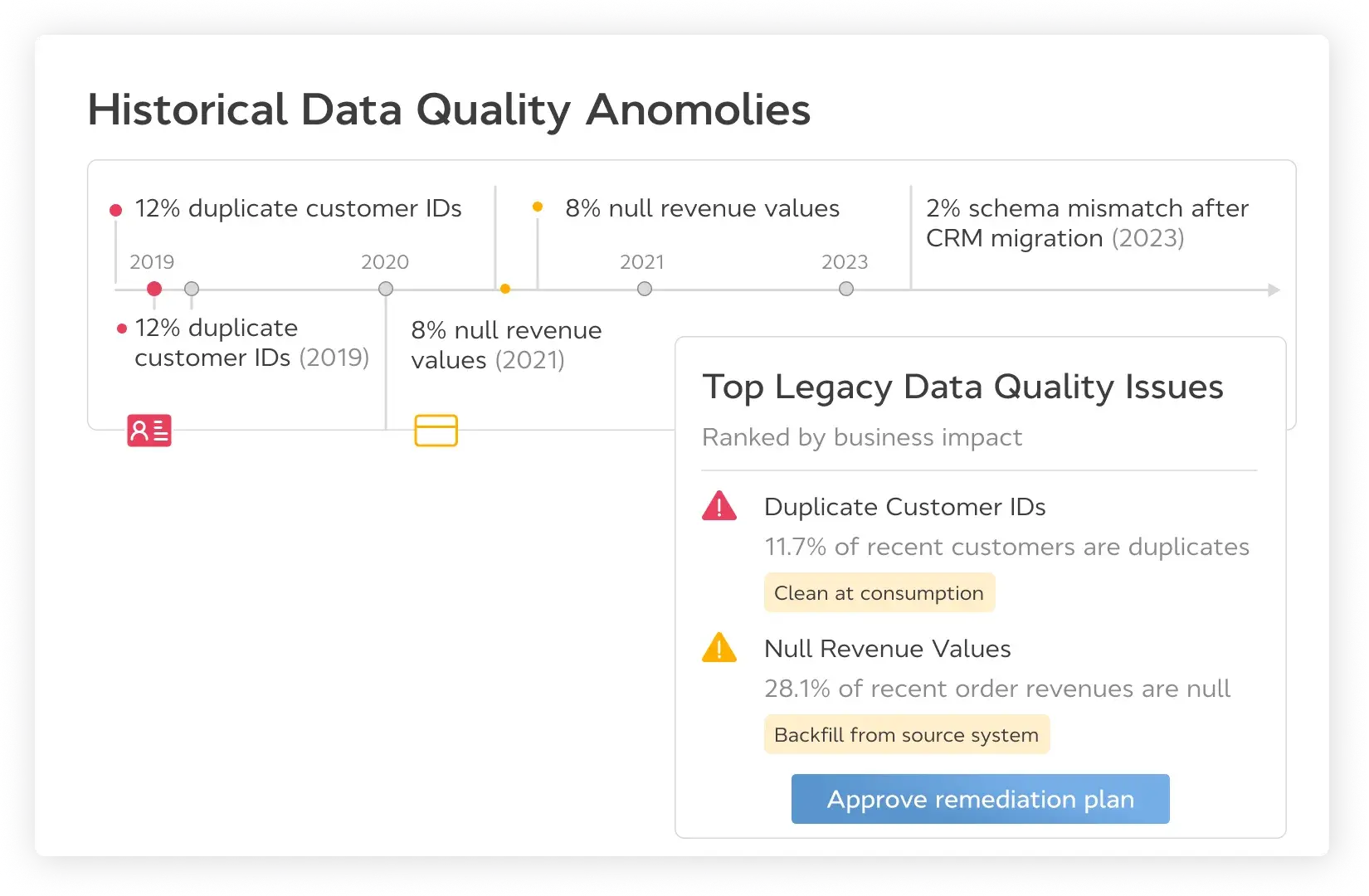
Manage Data Quality Debt at Scale
Eliminate years of accumulated data quality issues that slow analytics and governance.
OvalEdge agents uncover accumulated data quality debt, detect recurring anomalies across data sources and time periods, and recommend automated remediation or clean-at-consumption rules.
Humans decide what to fix, what to accept, and approve the remediation approach.
Always-On Data Quality Controls
Catch data quality issues early so bad data never reaches production.
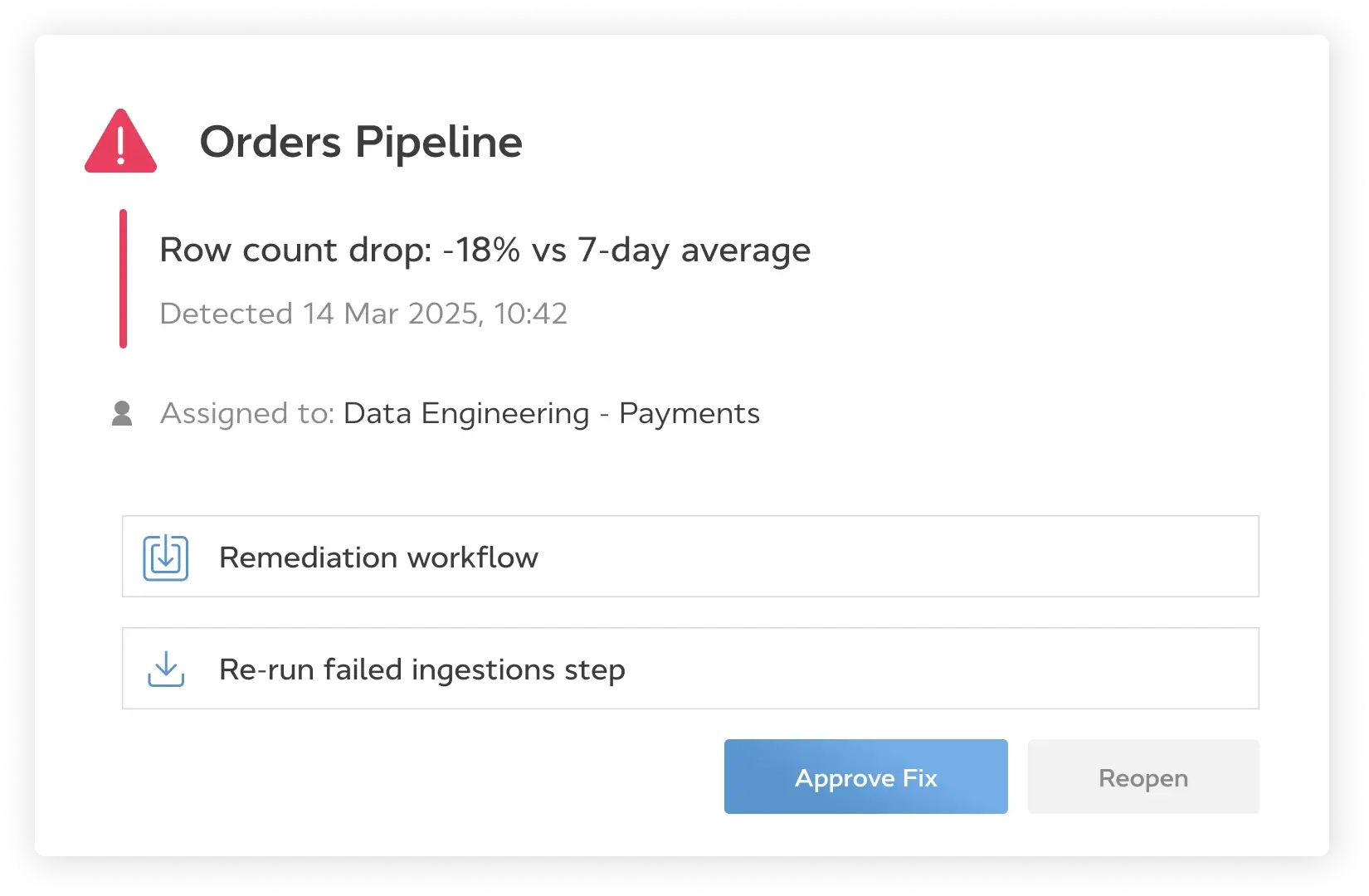
OvalEdge agents watch critical pipeline and dataset in real time, detect issues using rules and anomaly detection, and automatically prioritize, route, and trigger remediation workflows.
Humans validate critical issues and execute fixes as defined.
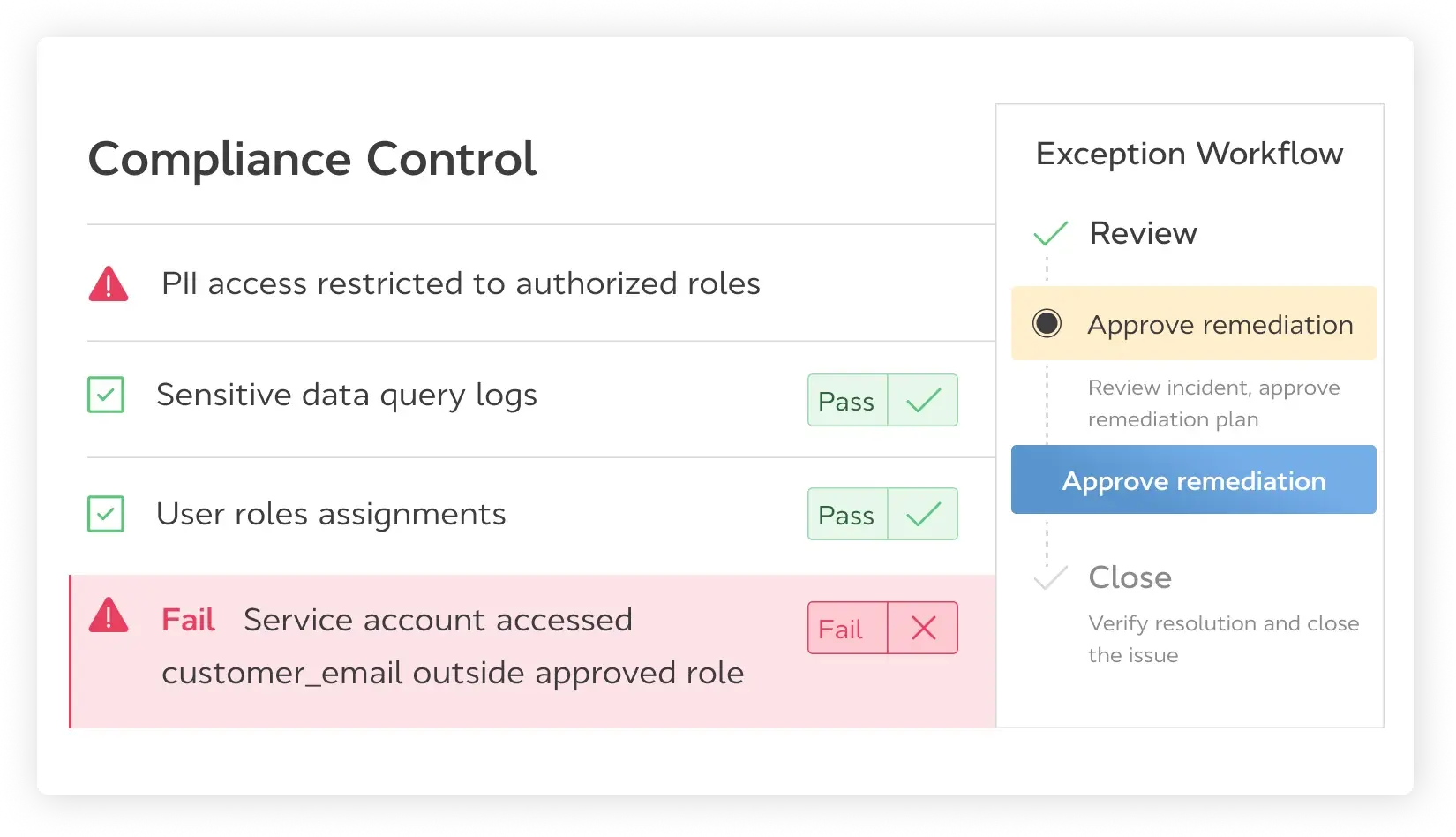
Turn policies into living controls
Make compliance continuous and auditable, not manual and reactive.
OvalEdge agents convert privacy and governance policies into executable controls across systems, automatically identifying PII/PHI, mapping processing activities, enforcing rights like RTF, maintaining ROPA, and continuously monitoring compliance with audit-ready evidence.
Humans review exceptions and sign off on compliance when required.
Data Adoption is a Flywheel
Automated governance creates trusted data. Trusted data in everyday workflows is what drives adoption.
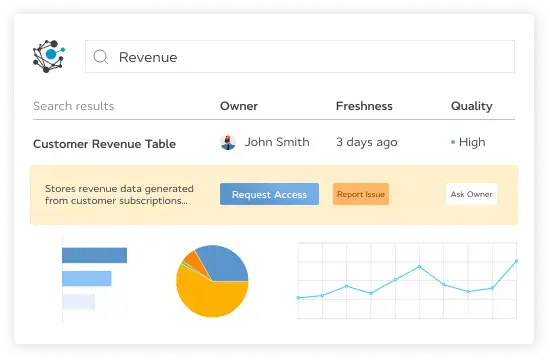
Find the Right Data and Act in Seconds
Search data in plain language, instantly understand what an asset is for, and take the next step request access, flag an issue, or route a question to the right owner without bouncing between tools
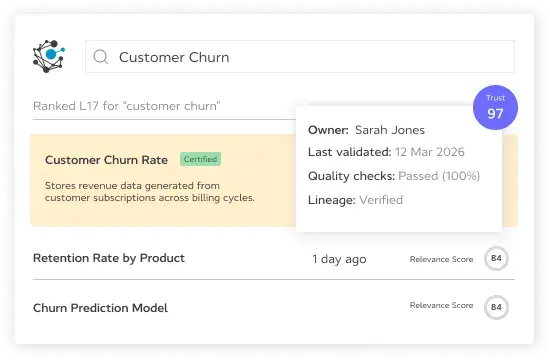
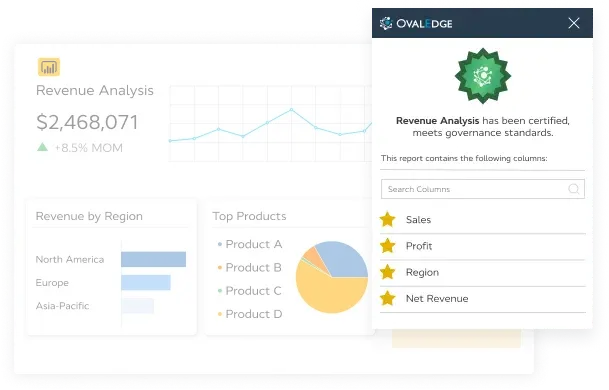
Make Certified Data the Default Choice
Trust signals make the “right” choice obvious: who owns it, what it means, what it’s used for, and whether it’s safe and current without extra digging.
Bring Governance Right Where You Work
Governance guidance appears in the tools people already use. Ownership, certification, sensitivity, quality signals, and recommended usage appear directly in Tableau, Power BI, Snowflake, Databricks, or a cloud console without switching contexts.
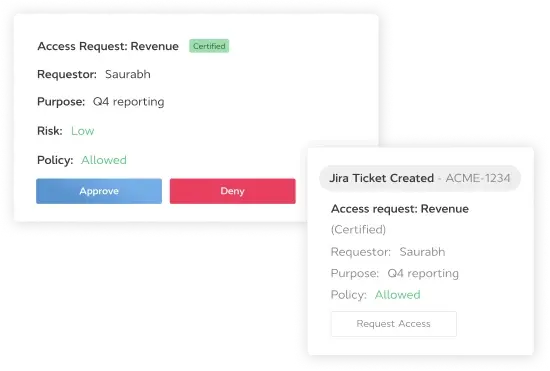
Approval Fast, In Context and Right Where You Work
Keep the momentum by embedding governance actions into everyday work tools. Access requests, exceptions, and issue workflows arrive as context-rich cards that owners and stewards can approve or route immediately keeping governance lightweight.
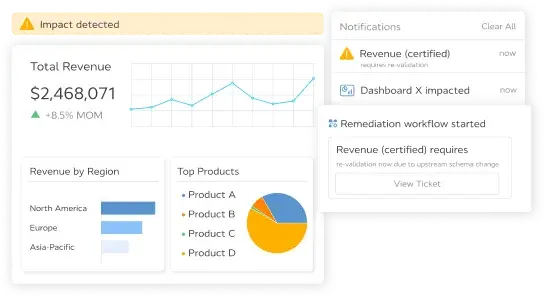
Stay Current Automatically
Improve adoption by keeping governance current as your data estate evolves. New assets, schema changes, quality incidents, and approvals are automatically tracked, and the right people are notified with clear next steps.
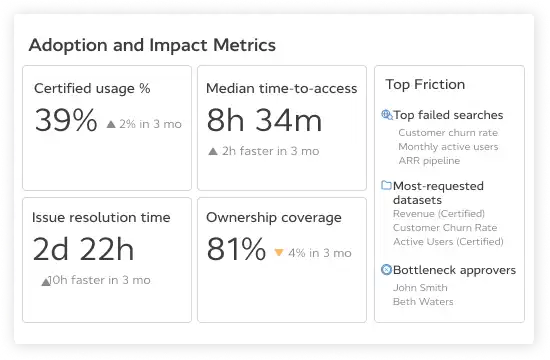
Measure Adoption and Impact. Improve It.
Track what’s working and what’s slowing people down - certified usage, request bottlenecks, ownership gaps, and resolution speed so teams can remove friction and compound adoption.
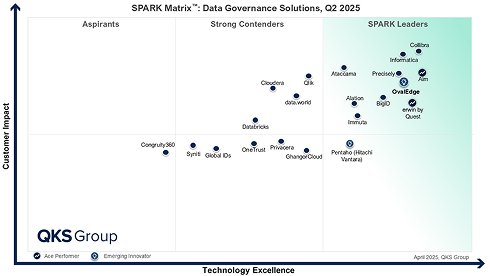
OvalEdge Recognized as a Leader in Data Governance Solutions
.png?width=1081&height=173&name=Forrester%201%20(1).png)
“Reference customers have repeatedly mentioned the great customer service they receive along with the support for their custom requirements, facilitating time to value. OvalEdge fits well with organizations prioritizing business user empowerment within their data governance strategy.”
.png?width=1081&height=241&name=KC%20-%20Logo%201%20(1).png)
“Reference customers have repeatedly mentioned the great customer service they receive along with the support for their custom requirements, facilitating time to value. OvalEdge fits well with organizations prioritizing business user empowerment within their data governance strategy.”
Gartner, Magic Quadrant for Data and Analytics Governance Platforms, January 2025
Gartner does not endorse any vendor, product or service depicted in its research publications, and does not advise technology users to select only those vendors with the highest ratings or other designation. Gartner research publications consist of the opinions of Gartner’s research organization and should not be construed as statements of fact. Gartner disclaims all warranties, expressed or implied, with respect to this research, including any warranties of merchantability or fitness for a particular purpose.
GARTNER and MAGIC QUADRANT are registered trademarks of Gartner, Inc. and/or its affiliates in the U.S. and internationally and are used herein with permission. All rights reserved.