.png)
A data catalog can cost $1.2K a year or $500K, and the license fee rarely tells the real story. Implementation, customization, and support often add up to as much as the subscription itself, so two similarly priced platforms can end up years apart once the bills start arriving.
Ten leading platforms are compared here on pricing model, customization effort, and support requirements, covering enterprise licensing, consumption-based pricing, and open-source options. The aim is to show what separates a headline quote from the number that actually lands on the invoice.
Vendors are good at hiding costs, as some may charge more as usage climbs, while others look cheap until months of customization get added to the bill. The breakdown ahead goes platform by platform, so the numbers still hold after the first sales call.
Why evaluating data catalogs by price alone misleads
A lower-priced data catalog does not automatically mean better value, though it is easy to assume so in a market with inconsistent pricing pages and wildly different feature sets. License cost rarely reflects total cost.
The bigger risk shows up in how the decision gets made, not on the invoice.
A Gartner September 2026 press release predicts that 60% of organizations that ignore data governance culture challenges will fail to govern AI successfully by 2027, a reminder that getting the tool right matters less than getting adoption right.
For an enterprise deployment, governance workflows, deployment scale, and support requirements can double the headline price before the first year is out.
Vendors are not always upfront about this. Some catalogs introduce usage-based charges that scale aggressively as adoption grows, while others look affordable at first glance but need months of customization before they fit the business.
Total cost of ownership comes down to three factors:
-
How much the base platform costs
-
How much customization it needs
-
How much support it takes to get teams actually using it
1. Base platform fees
Base platform fees cover the core software license, but the pricing model behind that number varies widely. Where some vendors charge a predictable flat rate, others may price by user count, cataloged assets, or data volume, which means the number on the quote is only the starting point.
What matters more is what the base package actually includes. Limits on data sources, metadata assets, or user roles are common, and each one is a lever for additional cost once adoption grows past the original plan.
2. Customization costs
Every organization governs data differently, and that shows up in customization cost:
-
Some data catalogs ship with flexible, no-code configuration that a data team can handle on its own.
-
Others need significant vendor involvement or in-house engineering effort before the platform works the way the business needs it to.
A lower-priced platform can become the more expensive option once automated data lineage requirements span BI tools, pipelines, and source systems, since that kind of customization is rarely included in the base fee.
3. Implementation and ongoing support
Implementation costs cover onboarding, deployment, training, and enablement, and they land before the platform delivers any value at all. Ongoing support afterward can range from basic ticketing to a dedicated account team providing strategic guidance.
The difference matters more than it looks on a pricing page. Strong support accelerates adoption and shortens the time to value, while thin support quietly adds operational cost for years after the contract is signed.
Platforms that unify catalog, lineage, and classification into a single Enterprise Context Graph tend to cut that support overhead further, because teams are not stitching separate tools together.
Key pricing models explained
Data catalog vendors typically use one of four pricing models. Understanding which model a vendor follows is one of the fastest ways to compare platforms and estimate long-term costs.
1. Subscription pricing
Subscription pricing uses a fixed annual license that is often tiered by user count and role, such as viewers, contributors, stewards, and administrators. It offers predictable budgeting but may restrict features or usage limits until a higher tier is purchased. Enterprise and mid-market platforms commonly use this model.
2. Asset-volume pricing
Under this approach, costs scale based on the number of cataloged assets, tables, datasets, or metadata objects managed within the platform. While costs can be predictable at smaller scales, expenses may increase significantly as the data estate expands.
3. Usage-based consumption pricing
Organizations pay based on platform activity, such as scans, compute resources, processing workloads, or metadata operations. Usage-based consumption pricing offers flexibility and a low barrier to entry, though it can make budgeting harder as usage grows. Cloud-native platforms such as Microsoft Purview and AWS Glue Data Catalog often use this model.
4. Hybrid tiered pricing
Hybrid models combine a platform fee with additional user-based, asset-based, or usage-based charges. Premium pricing may apply to administrative users, governance roles, or advanced capabilities. While flexible, this approach can be more difficult to forecast without a clear understanding of future adoption and usage patterns.
Additional pricing considerations
Beyond the pricing model itself, total costs are influenced by data volume, feature depth, deployment type, support requirements, and integration complexity. Advanced capabilities such as AI-powered recommendations, automated governance workflows, data quality monitoring, and lineage tracking may also increase overall costs.
That trend is already showing up in vendor pricing.Gartner's October 2025 worldwide IT spending forecast puts global software spending growth at 15.2% for 2026, with Gartner analyst John-David Lovelock attributing part of that jump directly to GenAI features raising both license and functionality costs.
OvalEdge expert insight: Platforms that combine cataloging with data quality monitoring, lineage, and compliance workflows typically deliver more long-term value than single-purpose tools.
In OvalEdge, agents like Curo (catalog curation), Sift (sensitive-data classification), and the Rule Building Agent handle these jobs automatically, which is what actually reduces tool sprawl and operational overhead.
Top 10 data catalog platforms compared by pricing, customization, and support
Data catalog pricing varies significantly across vendors. While some platforms follow traditional enterprise licensing models, others use consumption-based pricing or open-source frameworks with infrastructure and support costs. Understanding these differences is essential for evaluating the total cost of ownership and selecting a platform that aligns with organizational requirements.
The table below compares leading data catalog solutions based on pricing approach, estimated cost profile, customization effort, and support requirements.
|
Data catalog platform |
Estimated annual pricing* |
Pricing model |
Customization effort |
Support requirements |
|
~$198K+ |
Enterprise subscription |
High |
High |
|
|
~$170K–$500K+ |
Enterprise licensing |
High |
High |
|
|
~$129K–$500K+ |
Usage-based (IPU model) |
High |
High |
|
|
~$15.6K–$90K |
Subscription-based |
Moderate |
Moderate |
|
|
~$6K–$100K+ |
Subscription-based |
Moderate |
Moderate |
|
|
~$90K–$180K+ |
Subscription-based |
Moderate |
Moderate |
|
|
Variable, usage-based |
Consumption-based |
High |
High |
|
|
Variable, usage-based |
Consumption-based |
Moderate |
Low |
|
|
~$1.2K–$6K+ (infrastructure costs) |
Open source / Managed cloud |
High |
Moderate |
|
|
Infrastructure costs only |
Open source |
High |
High |
Estimated pricing ranges are based on publicly available information, vendor disclosures, community discussions, and industry research. Actual costs may vary based on deployment size, contract terms, support levels, and customization requirements.
At OvalEdge, we believe governance should not be a paid upgrade. Data classification, lineage mapping, and Enterprise Context Graph capabilities ship in the base subscription, which is why OvalEdge prices below platforms that sell the same capabilities as add-ons.
Making the right choice: Aligning cost with capability
When evaluating data catalogs, focusing solely on license fees can be misleading. The true Total Cost of Ownership (TCO) includes implementation effort, customization requirements, support quality, and the platform's ability to scale as data governance programs mature.
Budgets are moving in that direction already.
A Gartner February 2025 CFO survey found 77% of CFOs planned to increase technology spending in 2025, with nearly half budgeting increases of 10% or more, which raises the cost of choosing the wrong platform as much as it raises the room to invest in the right one.
Understanding these trade-offs is essential for selecting a solution that delivers long-term value.
1. Legacy platforms offer comprehensive capabilities at a premium
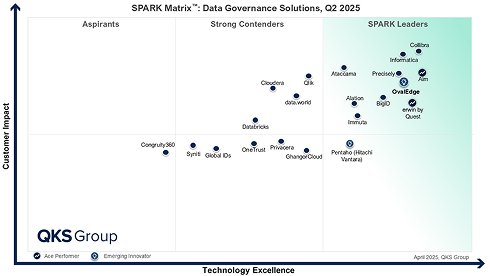
Platforms such as Alation, Collibra, and Informatica are designed for large enterprises with complex governance, compliance, and data management requirements. While they provide extensive functionality, they also come with high licensing costs, significant customization efforts, and ongoing support expenses.
For organizations with dedicated governance teams and substantial budgets, these platforms can be a strategic investment. For others, the long-term operational and professional services costs may outweigh the benefits.
Organizations seeking similar governance capabilities with lower implementation complexity and licensing costs may also want to evaluate Alation alternatives.
2. Cost-effective enterprise platforms provide a balanced approach
Solutions such as OvalEdge, Atlan, and data.world aim to balance enterprise-grade capabilities with more accessible pricing models. These platforms typically require less implementation effort while still offering strong governance, metadata management, and collaboration features.
Organizations looking for robust functionality without the complexity and cost of traditional enterprise platforms often find these solutions to be a practical middle ground.
Atlan prices range from about $6,000 a year at the entry tier to $100,000 or more for larger deployments, placing it in the same competitive band as OvalEdge on a pure dollar basis.
The number alone does not say what is included, though. Pricing scales with users and connected sources rather than a flat enterprise license, and buyers comparing Atlan against other mid-market platforms should confirm which governance capabilities, classification, lineage, and access control, ship in the quoted tier versus which sit behind an upgrade.
Atlan alternatives are a useful next stop for teams weighing a similar cloud-native profile at a different price point.
3. Consumption-based pricing requires careful planning
Microsoft Purview and AWS Glue Data Catalog follow usage-driven pricing models that can lower initial costs and simplify adoption. However, expenses can increase as data assets, scans, users, and workloads grow.
These platforms are often a good fit for organizations already operating within the Azure or AWS ecosystems, provided they have clear governance processes to monitor and manage consumption over time.
4. Open-source platforms reduce licensing costs but increase operational responsibility
OpenMetadata and Apache Atlas eliminate traditional software licensing fees, making them attractive from a procurement perspective. The trade-off shows up in who owns the operational work:
- Deployment and initial setup
- Ongoing customization
- Maintenance and version upgrades
These responsibilities typically fall on the internal team rather than a vendor. As a result, organizations trade lower licensing costs for higher engineering effort and ongoing operational overhead, and solutions in this tier generally suit teams with strong technical expertise and established DevOps practices.
OpenMetadata itself carries no license fee. The $1,200 to $6,000-plus range on the comparison table is entirely infrastructure and hosting cost, and it splits two ways:
-
Self-hosted: Pay only for compute and storage
-
Managed cloud: A higher monthly cost shifts some of that operational burden back to a vendor
What the table does not show is engineering time. Standing up connectors, configuring lineage, and maintaining upgrades typically requires a data engineer's ongoing attention, a real cost even when no invoice shows up for it. Teams evaluating OpenMetadata against a subscription platform should price in that engineering time before comparing the headline numbers.
5. Customization and support costs are often underestimated
Many organizations focus on subscription fees while overlooking the costs associated with configuring workflows, managing integrations, and obtaining timely support. Over time, these expenses can have a greater impact on total ownership costs than the software license itself.
When evaluating vendors, consider not only the product's capabilities but also the level of support, implementation assistance, and flexibility available. A platform that is easier to configure and maintain can often deliver a faster return on investment and lower long-term costs.
How to estimate 3-year TCO for a data catalog
Three-year total cost of ownership for a data catalog is the sum of six line items: licensing, implementation services, customization, internal team time, training, and ongoing support. Most buyers price out the first one and get surprised by the rest.
|
Cost line |
What it covers |
Year 1 |
Year 2 |
Year 3 |
|
Licensing |
Base subscription fee |
$40,000 |
$42,000 |
$44,000 |
|
Implementation services |
Vendor-led onboarding, initial connector setup |
$15,000 |
— |
— |
|
Customization |
Metadata models, workflow configuration |
$8,000 |
$2,000 |
$2,000 |
|
Internal team time |
Roughly 0.2 FTE on rollout and ongoing curation |
$18,000 |
$20,000 |
$20,000 |
|
Training |
Onboarding sessions and documentation |
$3,000 |
$1,000 |
$1,000 |
|
Ongoing support |
Standard support tier |
$6,000 |
$6,000 |
$6,000 |
|
Annual total |
$90,000 |
$71,000 |
$73,000 |
Note: These figures are illustrative estimates built to show how the cost components interact, not benchmarks from a specific vendor contract. Actual costs vary by deployment size, connector count, and internal staffing.
For a mid-market deployment supporting around 50 users and 20 connected data sources, a typical three-year breakdown looks like this. Licensing makes up less than half the total. Internal team time and ongoing support are the two line items buyers most often leave out of an initial budget, and together they can add 30 to 40% on top of the number on the subscription quote.
That scrutiny is intensifying industry-wide.
Forrester's 2026 technology and security predictions expect enterprises to defer 25% of planned AI spend into 2027 as CFOs demand clearer ROI before signing off, which makes a defensible three-year number worth building before the budget conversation, not after.
Adjust the assumptions for your own deployment size, connector count, and internal staffing before treating this as a quote.
For a deeper breakdown of how that investment converts into measurable value, see the data catalog ROI guide.
Vendor pricing red flags to spot
Pricing pages rarely show the terms that turn a competitive quote into an expensive contract. These six patterns are worth checking for before signing anything.
-
Separately licensed lineage: Lineage mapping sold as an add-on module instead of included in the base tier.
-
Unbounded usage-based metering: No cap on scans, API calls, or compute, so cost scales with usage the initial quote never shows.
-
Mandatory long services engagements: Implementation locked to a multi-month or multi-year professional services contract with no lighter option.
-
No SLA on scan completion: No committed timeframe for metadata scans or catalog refresh, which matters once data volume grows.
-
Add-on fees for standard connectors: Common sources like Snowflake, Salesforce, or S3 charged as extras instead of included connectors.
-
Seat-tier forced upgrades: Moving from viewer to contributor or steward access requires jumping to a higher-priced tier.
None of these show up on a pricing page. All six show up in the contract, usually after the deal is signed.
ROI and business value of a data catalog
While pricing is an important consideration, the value of a data catalog lies in the business outcomes it enables. The right platform can deliver significant operational efficiencies and long-term returns that extend well beyond the initial investment.
1. Faster data discovery and productivity
Reducing the time analysts spend searching for and validating data is the most measurable return a data catalog delivers. A centralized inventory of trusted data assets lets analysts, engineers, and business users find relevant information without asking around or re-verifying a dataset someone else already validated.
In OvalEdge, askEdgi lets users query governed data in natural language, cutting discovery time further.
The math behind that time savings is straightforward. If five analysts each spend two hours a day on manual data discovery at a fully loaded cost of $85 an hour, that is $850 a day, or roughly $212,000 a year in recoverable time. A 30% productivity lift recovers close to $65,000 of that annually, for a team of five alone.
OvalEdge expert insight: A Forrester Total Economic Impact study measured 337% ROI over three years, with a 30% lift in analyst productivity and a 75% reduction in sensitive-data classification effort.
The Forrester Total Economic Impact study was commissioned by OvalEdge.
2. Stronger data quality, governance, and compliance
Visibility into metadata, lineage, ownership, and usage is what makes a data catalog a governance tool rather than just a search index. That visibility helps teams catch inconsistencies, enforce policy consistently, and trust the data they are working with, and it extends naturally into compliance.
Clear documentation of data sources, ownership, and lineage simplifies audits and closes governance gaps before a regulator finds them, particularly as requirements around AI and data use continue to expand.
The 75% classification-effort reduction cited above reflects this directly. Automated classification and lineage do the identification work that used to require someone reviewing spreadsheets by hand.
3. Accelerated analytics and AI initiatives
Successful analytics and AI programs depend on trusted, well-governed data.
Gartner's February 2025 research on AI-ready data found that 63% of organizations either lack the right data management practices for AI or are unsure whether they have them.
A data catalog makes it easier for teams to discover relevant datasets, understand data context, and collaborate across functions, which is what actually determines whether an AI initiative reaches production or stalls in a pilot.
Match platform depth to what you actually need
Choosing a data catalog comes down to matching platform depth to the complexity of your data estate and the budget you can defend to finance.
Platform-native tools work well when everything already lives in one ecosystem. Standalone platforms earn their higher price tag once your data spans multiple clouds, warehouses, and on-premises systems, and once AI initiatives start asking questions no single platform-native tool can answer alone.
For teams that want enterprise-grade governance without enterprise-grade pricing, platforms like OvalEdge connect catalog, lineage, quality, and classification into one Enterprise Context Graph, a governed foundation that grounds AI agents in trusted, auditable context, at a fraction of what Collibra or Informatica charge.
If you want to see how the Enterprise Context Graph works for your data estate, schedule a demo with OvalEdge today.
.png?width=1081&height=173&name=Forrester%201%20(1).png)
.png?width=1081&height=241&name=KC%20-%20Logo%201%20(1).png)